In 2025, NASA’s Kennedy Space Center (KSC) solidified its status as the world’s busiest launch hub, supporting more than 90 missions spanning human spaceflight, lunar exploration, and space science. Launches from Florida helped push the state past 100 orbital missions in a single year, underscoring Kennedy’s central role in sustaining the International Space Station, advancing Artemis, and enabling an expanding commercial presence in space.
Partnerships, Lunar Firsts, and ISS Crew Rotations
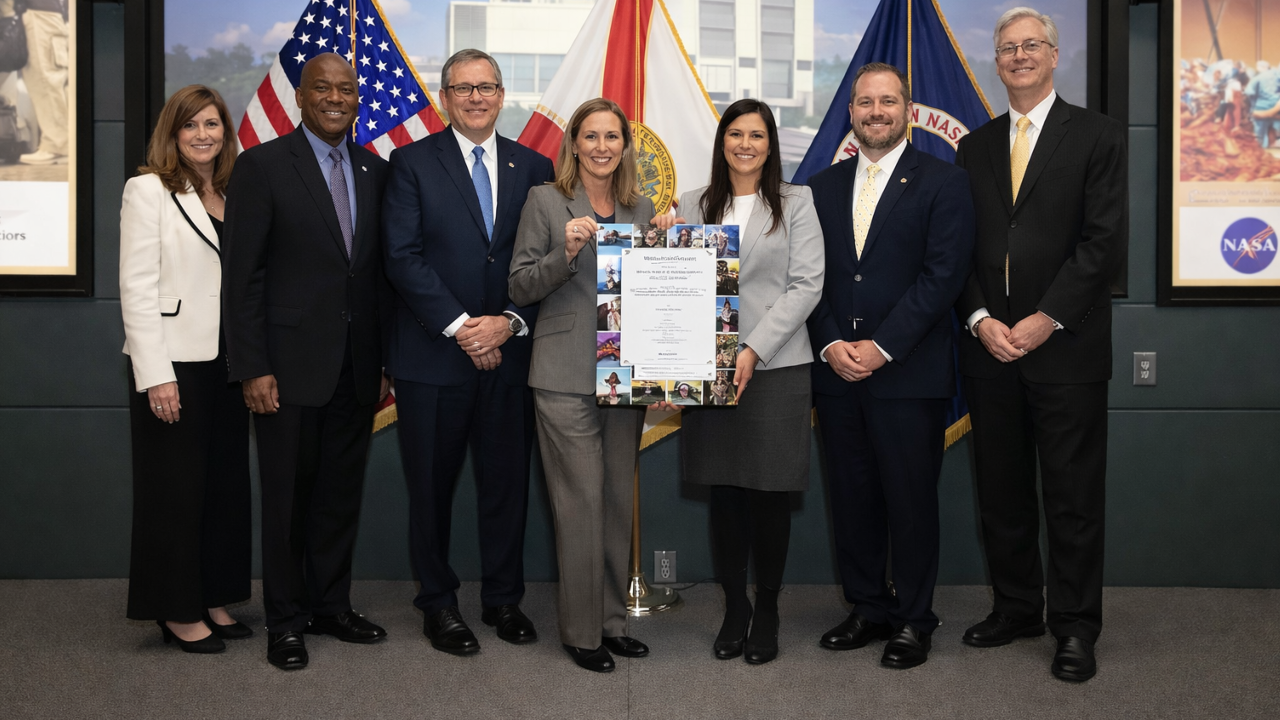
Kennedy’s year began with a strategic investment in future talent and technology. In January, Center Director Janet Petro signed an agreement creating the Florida University Space Research Consortium, the nation’s only university consortium formally tied to a NASA center. The University of Florida, the University of Central Florida, and Embry-Riddle Aeronautical University joined forces under the partnership to support Moon-to-Mars research, deepen workforce development pipelines, and align Florida’s academic research directly with NASA’s long-term exploration plans.
Commercial lunar exploration took a major step forward soon after. Firefly Aerospace’s Blue Ghost Mission One, launched January 15 from Launch Complex 39A, successfully landed on the Moon on March 2. The lander carried multiple NASA instruments through the Commercial Lunar Payload Services initiative, proving precision landing and surface operations capabilities by a private provider.
Just days later, Intuitive Machines’ IM-2 Nova-C mission added a second commercial success. Launched February 26 from LC-39A and touching down near the Mons Mouton region on March 6, IM-2 carried NASA technology demonstrations and tested advanced navigation and communications techniques in the challenging lighting and terrain of the lunar polar area. Together, Blue Ghost and IM-2 made 2025 the first year to feature two successful commercial lunar landings, pointing toward a future of routine robotic deliveries in support of Artemis surface activities.
Human spaceflight remained a steady pillar of Kennedy’s operations. SpaceX’s Crew-10 mission lifted off March 14, carrying NASA astronauts Anne McClain and Nichole Ayers, JAXA astronaut Takuya Onishi, and Roscosmos cosmonaut Kirill Peskov to the International Space Station. The crew spent 147 days in orbit supporting experiments, station upkeep, and international cooperation. That same month, Crew-9 returned home, splashing down off Florida’s coast on March 18 with Nick Hague, Suni Williams, Butch Wilmore, and Aleksandr Gorbunov aboard. Their safe recovery by Kennedy-led teams and partner agencies highlighted the center’s full life-cycle role, from launch through splashdown and retrieval.
Science Missions and Infrastructure Upgrades
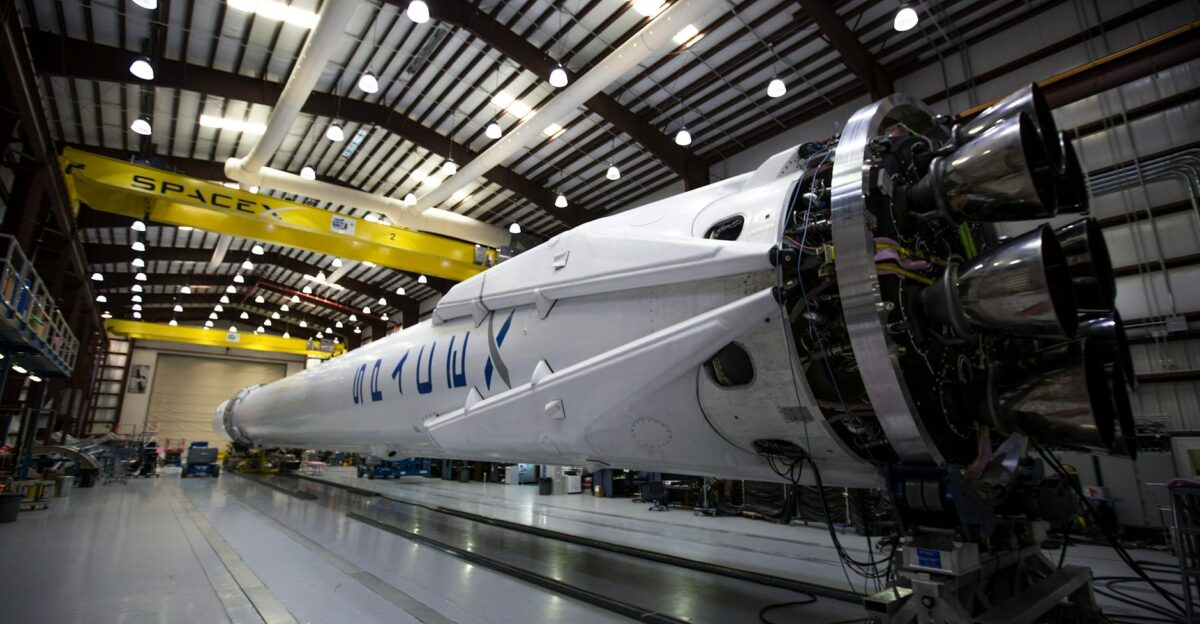
Kennedy’s influence extended well beyond Florida’s shoreline. In March, NASA’s Launch Services Program at Kennedy oversaw the successful Falcon 9 launch of the SPHEREx and PUNCH missions from Vandenberg Space Force Base in California. SPHEREx will survey the sky in infrared light to study the universe’s evolution, while PUNCH focuses on the Sun’s outer atmosphere. Managing these launches demonstrated Kennedy’s growing responsibility for NASA science missions across multiple ranges.
Closer to home, a major infrastructure project reached a milestone. On March 19, NASA opened the westbound span of the new Causeway Bridge linking Kennedy Space Center with the Florida mainland over the Indian River Lagoon. Built in cooperation with the Florida Department of Transportation, the bridge improves safety and reliability for daily workforce traffic and launch day operations, while using modern design to reduce congestion and limit impacts on the surrounding coastal ecosystem.
At sea, Kennedy teams supported Underway Recovery Test-12 off the coast of California, rehearsing recovery procedures for the Artemis II Orion spacecraft and crew. Navy assets, NASA engineers, and astronauts practiced locating, securing, and retrieving Orion under realistic ocean conditions, refining techniques that will be used to bring Artemis crews home after future lunar flyby missions.
Orbital Logistics and the March Toward Artemis
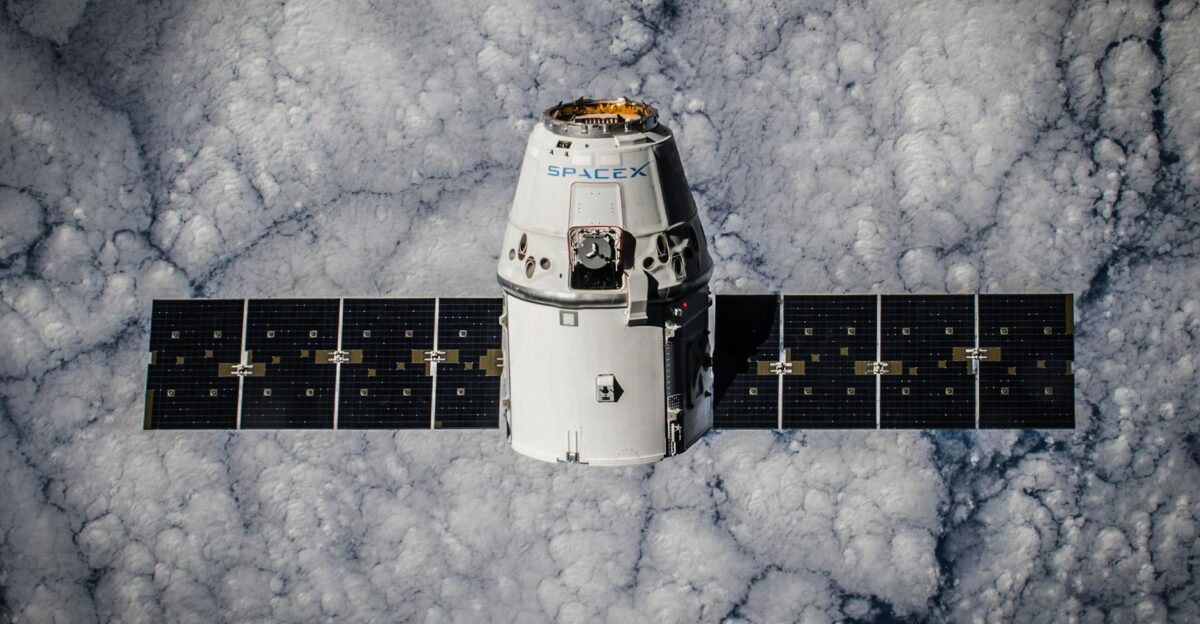
Kennedy sustained a high tempo of cargo operations to the International Space Station. On April 21, a Falcon 9 launched the CRS-32 mission from LC-39A, sending a Dragon spacecraft loaded with roughly 6,700 pounds of experiments, hardware, and supplies. Including this flight, Kennedy-supported missions delivered more than 22,700 pounds of cargo to the station in 2025.
Later in the year, ISS logistics accelerated further. On August 24, a Falcon 9 launched the CRS-33 mission, adding more than 5,000 pounds of research payloads, spares, and crew provisions. In September, Northrop Grumman’s first Cygnus XL spacecraft launched on a Falcon 9 from Florida, carrying about 11,000 pounds of cargo. The upgraded Cygnus design significantly boosted cargo capacity, and Kennedy’s teams adapted processing and integration flows to accommodate the larger vehicle.
Crew rotations continued smoothly as well. Crew-11 launched from LC-39A in August with NASA astronauts Zena Cardman and Mike Fincke, JAXA astronaut Kimiya Yui, and Roscosmos cosmonaut Oleg Platonov. The mission maintained uninterrupted ISS operations and microgravity research that supports advances in medicine, materials, and Earth observation.
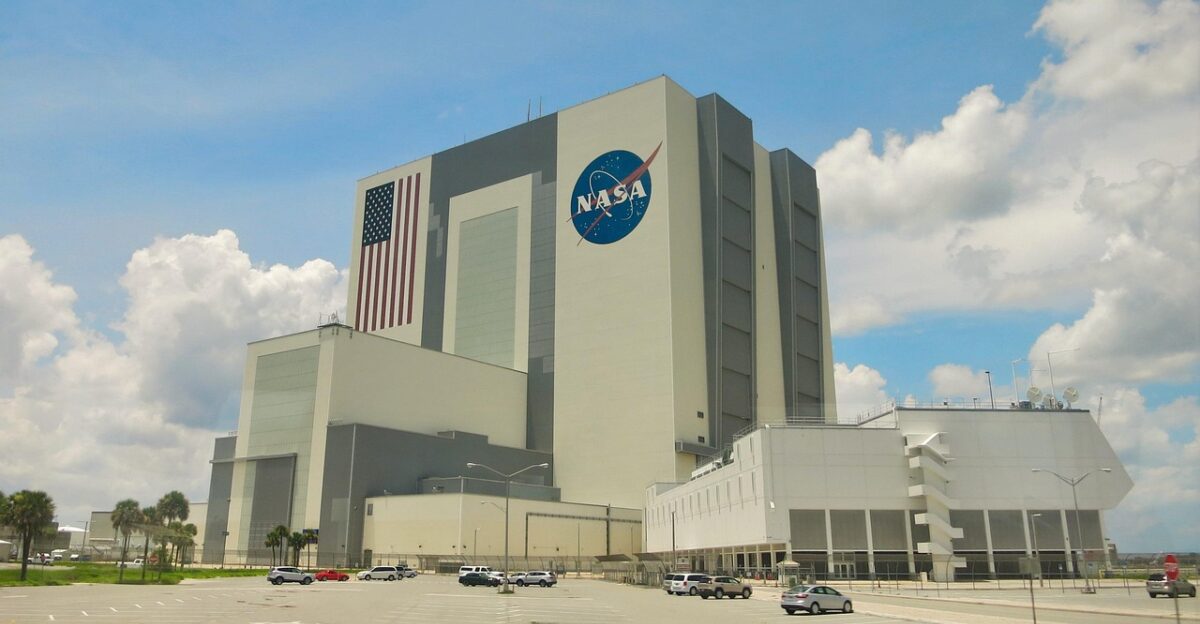
Meanwhile, Artemis preparations moved into visibly advanced stages. Mid-summer saw major Artemis III hardware arrive at the Vehicle Assembly Building for initial processing and inspections, even as Artemis II remained the primary near-term priority. Teams verified tooling, handling procedures, and coordination with industry partners to support multiple missions in parallel. In August, the Orion spacecraft for Artemis II was moved into position to be mated with its 44-foot Launch Abort System, a key safety component designed to pull the crew capsule away from the rocket in an emergency. On October 20, technicians stacked Orion atop the Space Launch System inside the Vehicle Assembly Building, creating the fully integrated Artemis II vehicle and marking one of the year’s most symbolic milestones.
Deep-Space Science and New Commercial Partners
Kennedy also helped open new frontiers in heliophysics and planetary science. On September 24, a Falcon 9 launched NASA’s Interstellar Mapping and Acceleration Probe (IMAP) from LC-39A. IMAP will study the boundary where the solar wind meets interstellar space, improving understanding of how the Sun’s magnetic bubble shields the solar system from high-energy particles.
In November, Kennedy supported a new commercial partner as Blue Origin’s New Glenn rocket launched its first NASA science payload from Launch Complex 36. The mission carried NASA’s twin ESCAPADE probes, which will investigate how the solar wind erodes Mars’ atmosphere and influences the planet’s climate history. The flight marked a significant step in expanding NASA’s launch options with new heavy-lift commercial vehicles.
As the year closed, Artemis II preparations entered final rehearsal. On December 20, astronauts Reid Wiseman, Victor Glover, Christina Koch, and Canadian Space Agency astronaut Jeremy Hansen conducted a full dry dress rehearsal inside the Vehicle Assembly Building. They practiced suiting up, entering Orion, and moving through countdown procedures, while ground teams verified systems and timelines ahead of future rollout and fueling tests.
By the end of 2025, Kennedy Space Center had demonstrated the ability to support frequent ISS logistics, pioneering commercial lunar missions, major science observatories, and the assembly and testing of a crewed lunar vehicle—all within a single year. As NASA targets Artemis II in early 2026 and looks toward sustained lunar operations and future Mars exploration, Kennedy’s evolving mix of government programs, university partnerships, and commercial launch activity is positioning the center as a long-term gateway for human and robotic missions deeper into the solar system.
Sources:
NASA.gov: “NASA’s Kennedy Space Center Looks to Thrive in 2025” (March 25, 2025).
NASA.gov: “New Bridge Ready to Serve NASA, America’s Space Interests” (March 18, 2025), covering Causeway Bridge opening.
NASA.gov (University of Florida News): “NASA’s Kennedy Space Center and Florida universities unite” (January 8, 2025), on Florida University Space Research Consortium.
Firefly Aerospace: “Firefly Aerospace’s Blue Ghost Mission 1 Successfully Launches” (March 2, 2025).
NASASpaceFlight.com: “Falcon 9 launches second lunar mission of 2025 with IM-2”