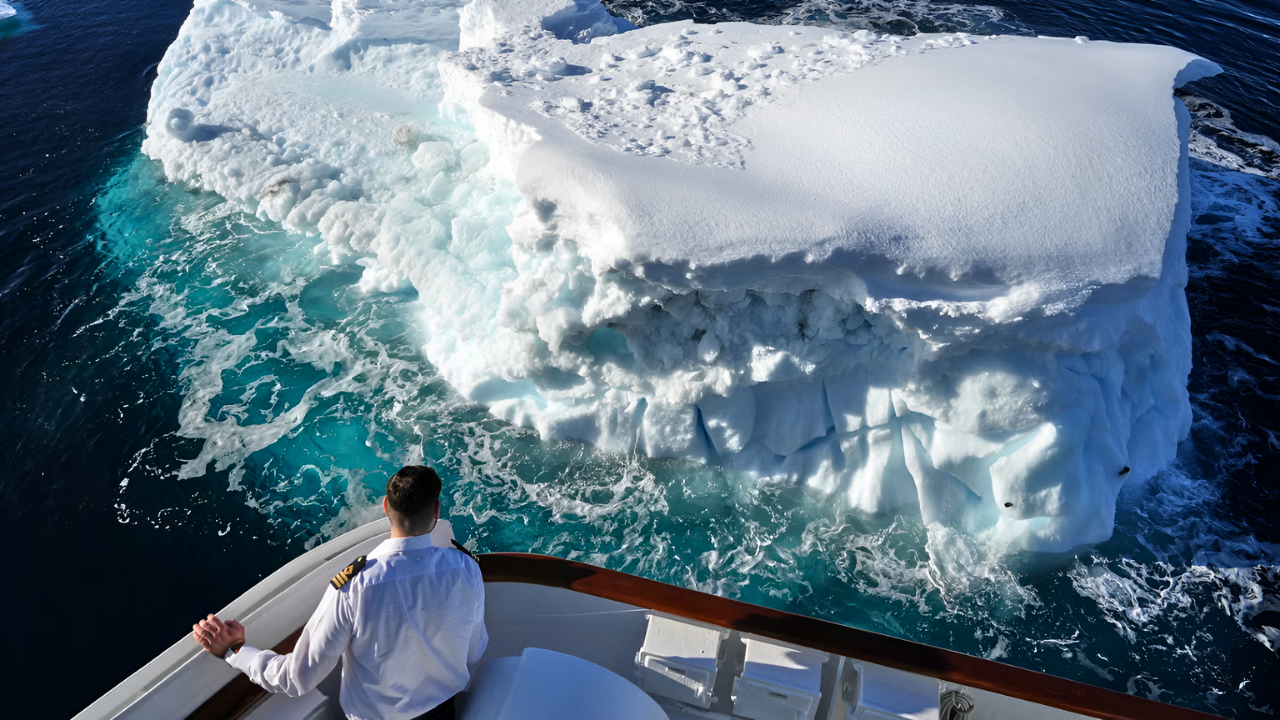
In the vast South Atlantic, a colossal iceberg met its end in late December 2025, its fractured surface gleaming with bright blue melt ponds under the gaze of NASA’s Terra satellite. Just one day later, an astronaut on the International Space Station captured the same scene: A23a, one of Earth’s most enduring ice giants, shrinking and splintering in real time after nearly 40 years adrift.
A Record-Setting Colossus
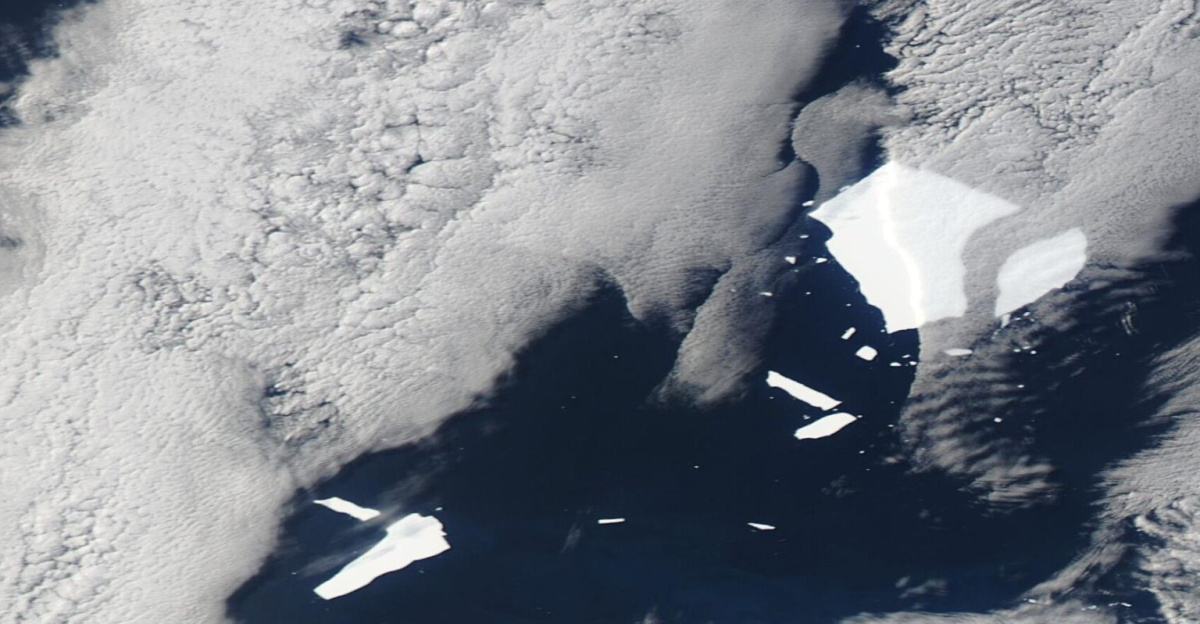
At its peak, A23a covered about 4,000 square kilometers—roughly 1,500 square miles, nearly three times the size of New York City. This immense tabular form earned it repeated status as the world’s largest iceberg over decades, a rare blend of scale and persistence unmatched in polar records.
Born in the Cold War Era
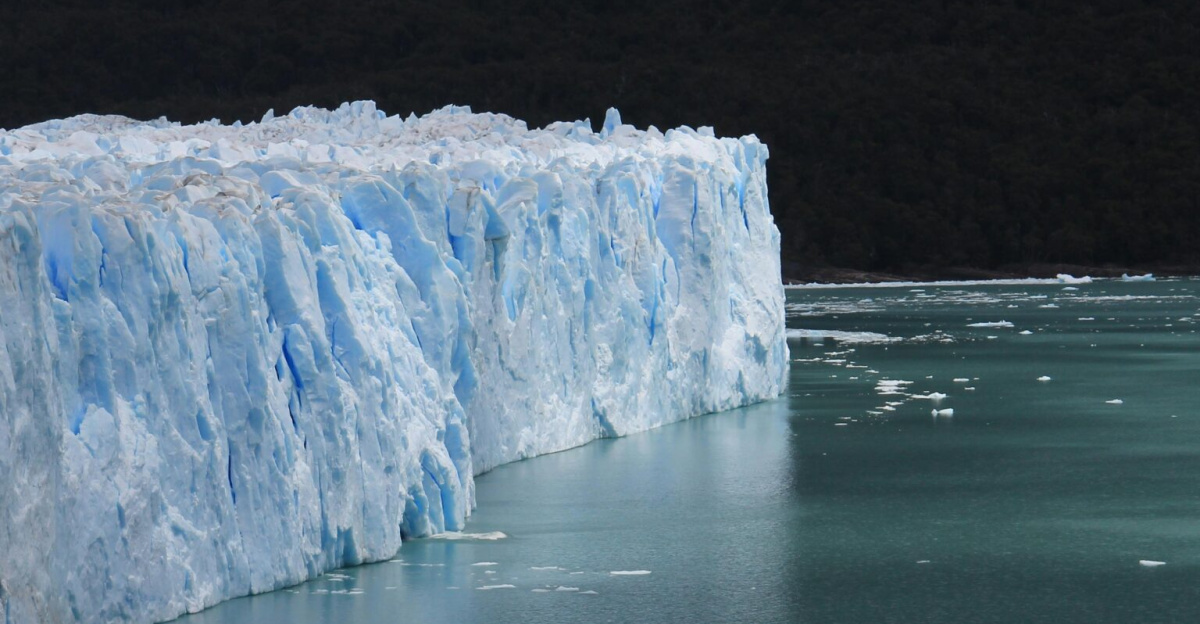
The iceberg calved from Antarctica’s Filchner-Ronne Ice Shelf in the Antarctic summer of 1986. Its tabular shape immediately stood out, but unlike most bergs that fragment or melt quickly, A23a began an extraordinary journey that defied expectations.
Grounded on the Seafloor
Soon after breaking away, A23a lodged in the shallow Weddell Sea, remaining pinned to the seafloor for around 34 years. This unusual grounding shielded it from waves, currents, and erosion, allowing satellites to monitor its stable position year after year. Scientists saw it as a natural experiment, demonstrating how certain conditions could extend an iceberg’s life amid regional warming and ice loss.
Breaking Free at Last
In 2020, imagery showed A23a finally dislodging, drifting into open ocean. Freed from its anchor, it faced new threats: powerful currents, collisions, and warmer waters that hastened its vulnerability.
Caught in Ocean Currents
The berg entered a Taylor column, a spinning ocean vortex where it rotated slowly for months, trapped despite floating free. Later, it tangled in a larger South Atlantic gyre, delaying its northward path until December 2024. Years in relatively warmer waters sparked visible surface melt, marking the start of its rapid decline.
A Near Ecological Disaster
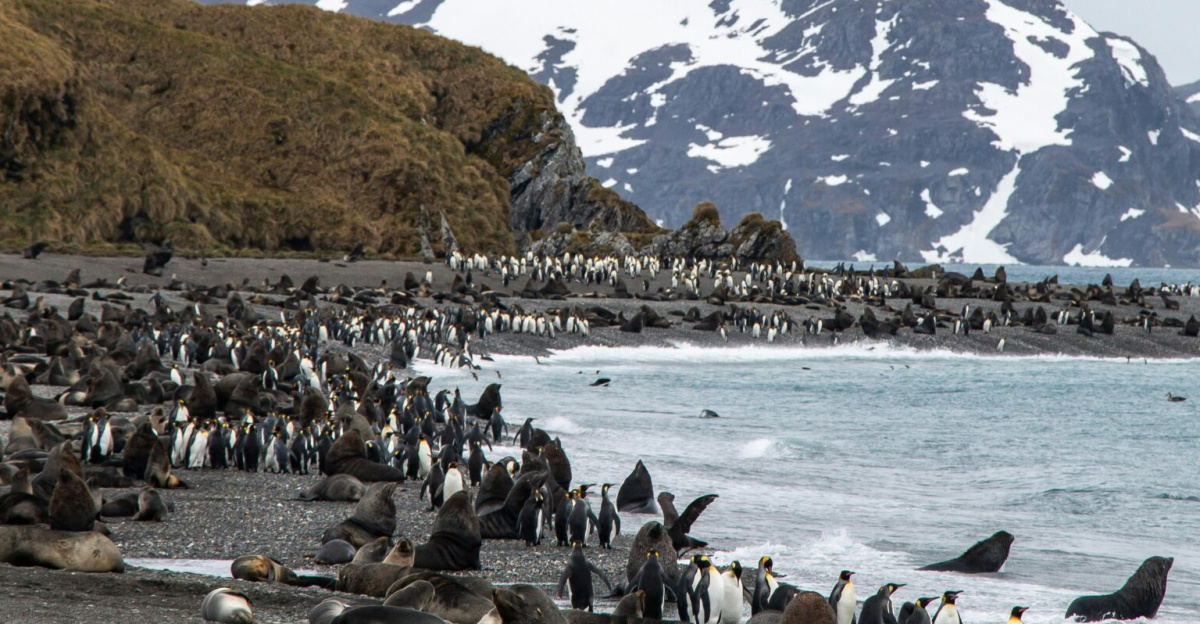
As A23a neared South Georgia Island in 2025, fears grew of it grounding and blocking feeding grounds for millions of penguins and seals, potentially causing mass starvation in breeding season. Shifting currents spared the island, but the close call highlighted risks drifting megabergs pose to sub-Antarctic wildlife.
Final Collapse in Warming Waters
By late 2025, warmer South Atlantic conditions fueled intense melting, forming vivid blue ponds that weighed down the ice and triggered fractures. Freshwater blowouts—pressurized meltwater erupting from weak spots—signaled late-stage disintegration. On December 26, Terra satellite images revealed A23a reduced to about one-third its original size, ringed by hundreds of fragments. The next day, Expedition 74 astronauts documented the ponds up close, offering a stark view of collapse.
Ancient Ice, Modern End
Even in decay, A23a preserved centuries-old glacial striations on its surface, grooves from its ice shelf days. In September 2025, it surrendered its largest-iceberg title to D15A, spanning 3,000 square kilometers. By early 2026, A23a’s remnants measured roughly 1,182 square kilometers, spawning thousands of smaller fragments that scattered into shipping lanes, challenging detection and navigation.
As A23a fades, its saga underscores shifting polar dynamics: warmer oceans could spawn more megabergs, straining ecosystems, maritime routes, and observation efforts in the vast Southern Ocean. Scientists continue tracking fragments, adapting tools to monitor an era of accelerated ice loss and its ripple effects.
Sources:
NASA Earth Observatory | Meltwater Turns Iceberg A-23A Blue | January 7, 2026
CNN | World’s biggest iceberg, A23a, has broken up | September 3, 2025
BBC | A23a: Giant iceberg on collision course with island | January 22, 2025
British Antarctic Survey | World’s largest iceberg A23a breaks free | December 12, 2024
PetaPixel | Astronaut Photographs Iceberg From Space Just ‘Days or Weeks Before It Disintegrates’ | January 8, 2026
Live Science | Mega-iceberg A23a, formerly the world’s largest, turns into bright blue mush as scientists watch it fall apart | January 12, 2026