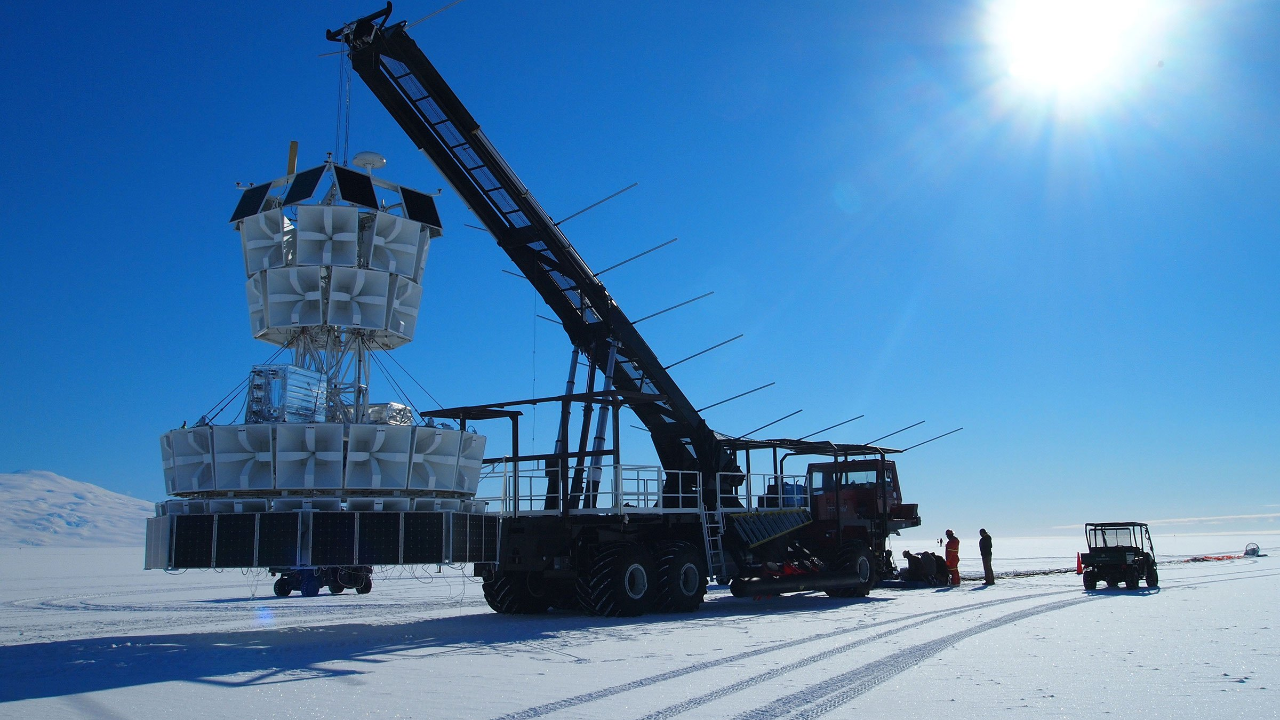
In 2016, a NASA experiment flying high above Antarctica picked up something truly bizarre, radio signals that didn’t behave the way science says they should. Instead of coming from space, these signals seemed to rise up from deep under the Antarctic ice. Scientists were stunned, calling the readings impossible. The discovery quickly caught worldwide attention, sparking theories about hidden energy, unknown particles, and even mysterious natural processes happening far below the surface.
NASA’s findings were later confirmed by independent researchers, proving the signals weren’t just a glitch. This strange Antarctic event has become one of the most puzzling discoveries in modern physics and continues to challenge scientists to rethink fundamental laws they once took for granted.
Breaking the Laws of Physics?

Things got even stranger when experts realized what these signals implied that they would have needed to pass through nearly 4,000 kilometers of solid rock and ice, something that shouldn’t be possible with known physics. The mysterious waves defied every model that scientists rely on. Investigators began asking hard questions. Had they just witnessed a completely new kind of particle, or was their technology missing something crucial?
With physics unable to explain it, the scientific community called for new instruments and tests. The goal is to capture more data, verify the findings, and potentially rewrite major parts of particle theory.
Why Balloons Matter in Science
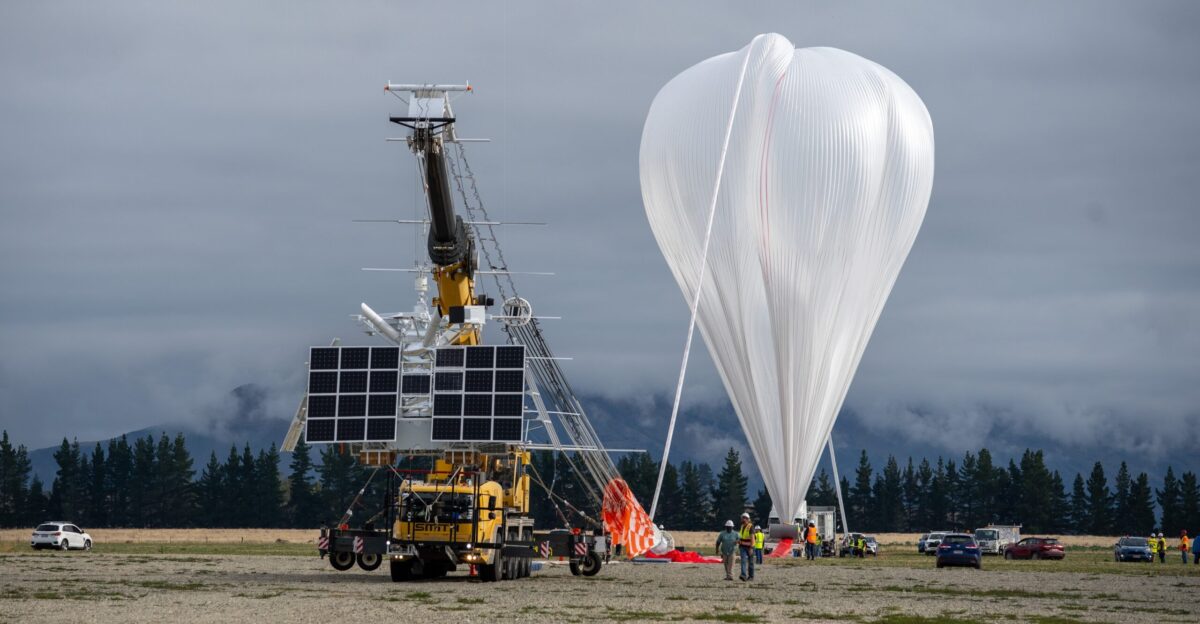
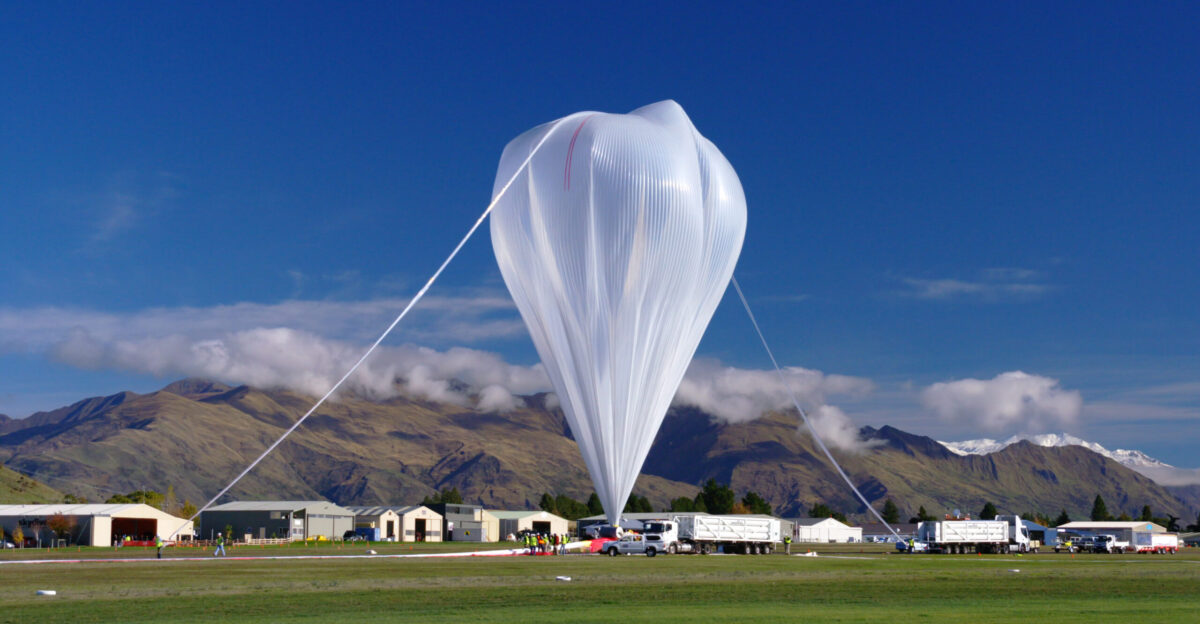
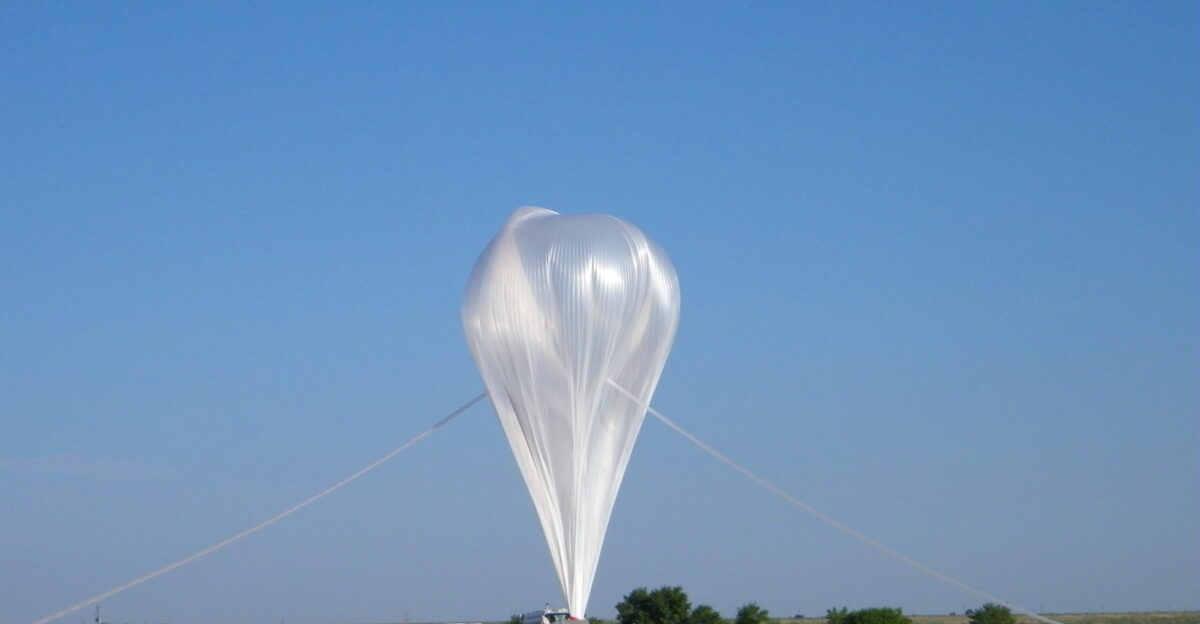
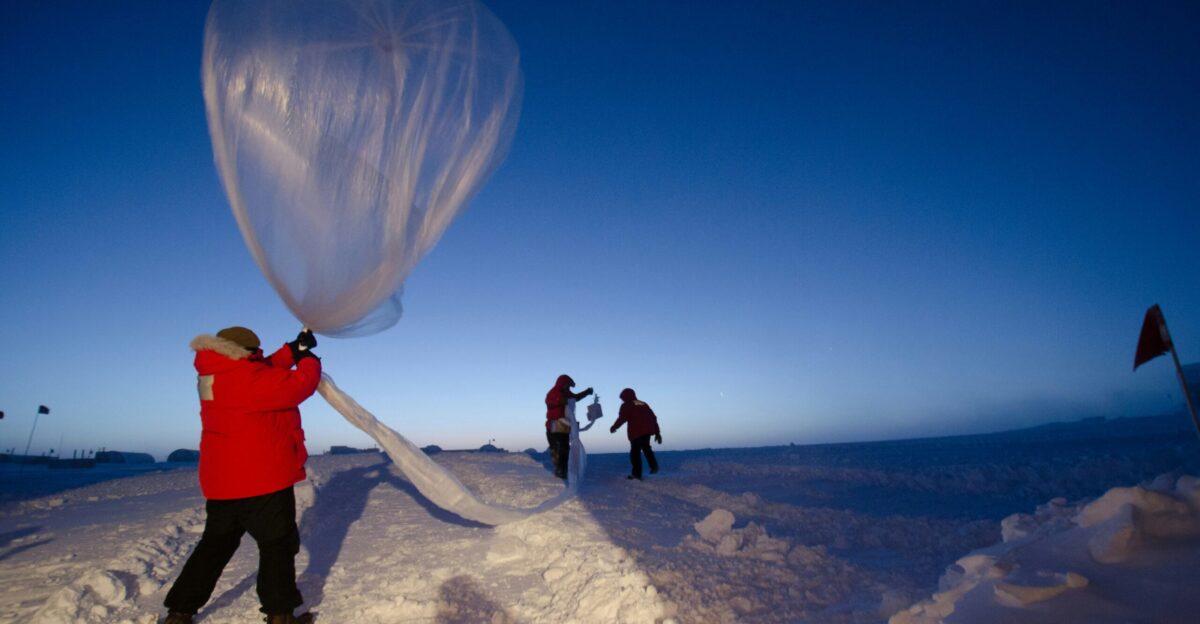
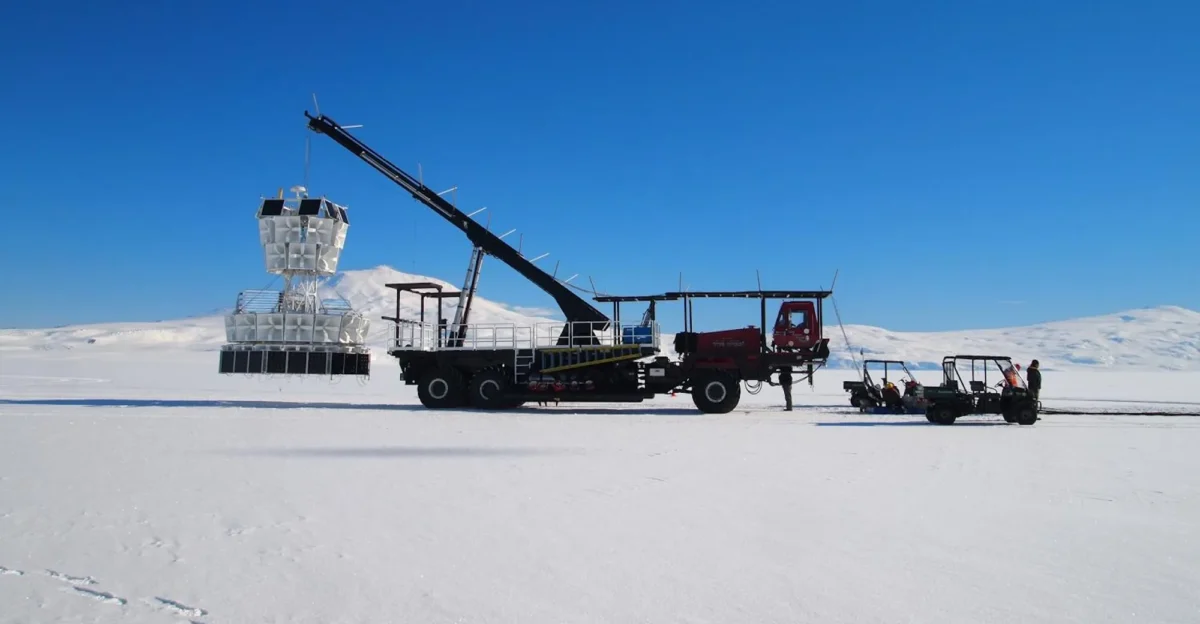
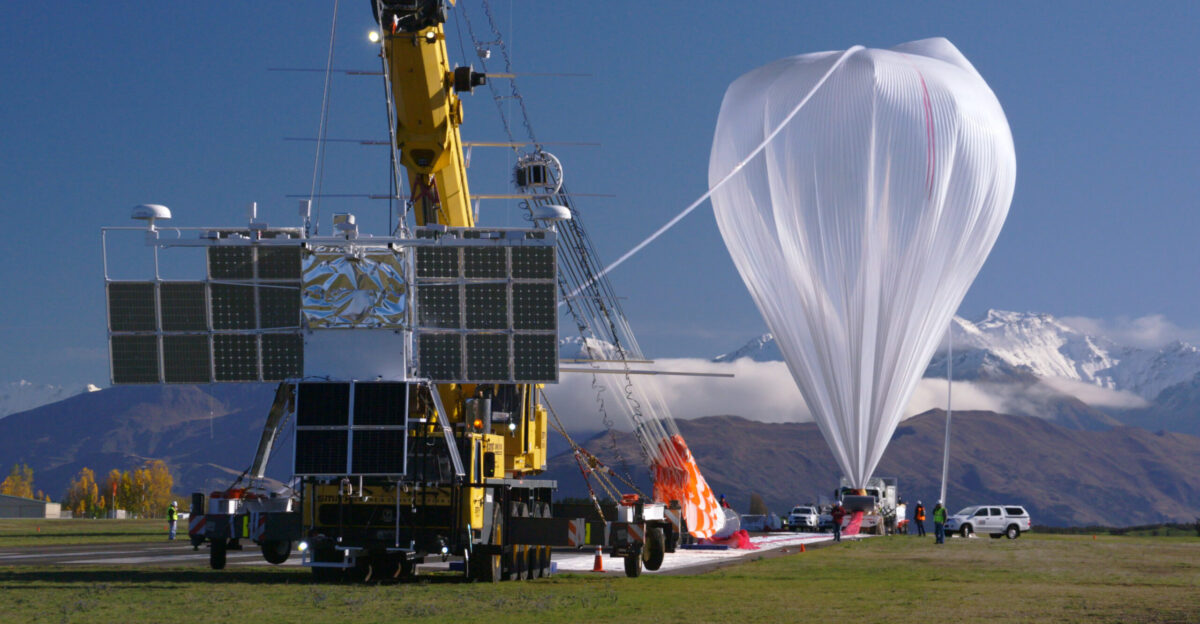
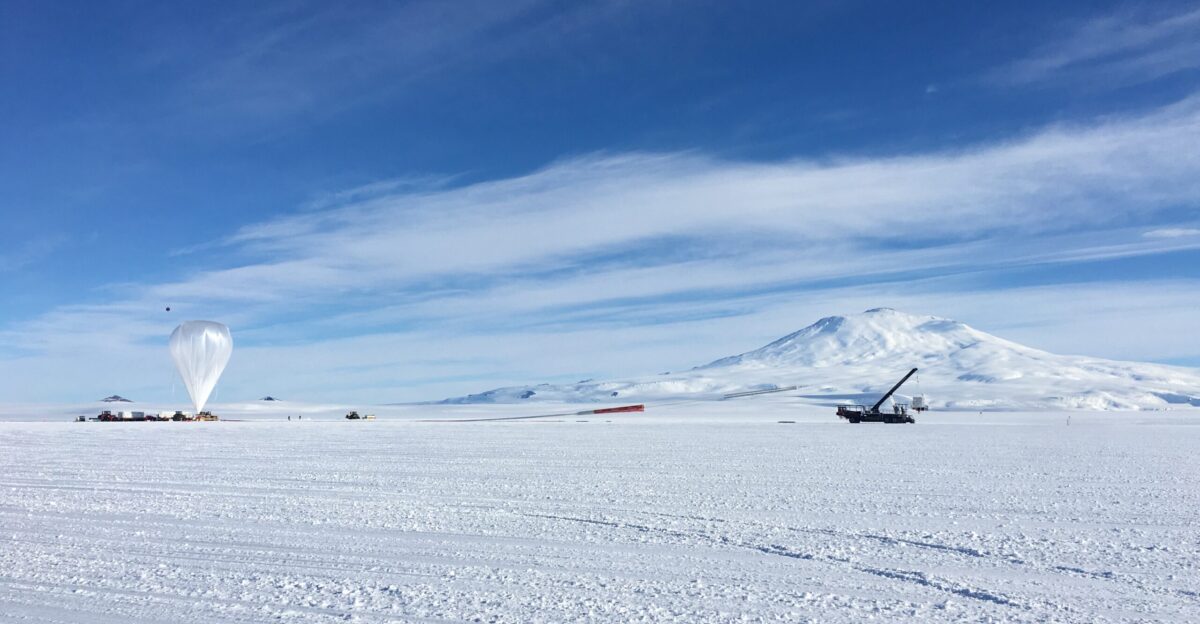
For decades, NASA has launched high-altitude balloons to study the upper atmosphere and detect cosmic rays. Floating 23 miles above Earth, these balloons carry antennas and detectors capable of scanning huge regions of sky and ice. The Antarctic Impulsive Transient Antenna, or ANITA, was one such mission, designed to catch radio signals from ultra-high-energy particles hitting the ice.
Antarctica is ideal for this research because its dry air and thick ice sheet reduce interference. The first ANITA flight launched in the mid-2000s, marking a key milestone in cosmic particle studies. “Balloon-based science allows us to see things satellites can’t,” said Dr. Peter Gorham, lead investigator for the NASA project. ANITA’s goal was simple, to find new physics hiding in the coldest place on Earth. But what it found was beyond any scientist’s expectations.
Growing Pressure for Answers
As years passed, ANITA kept detecting signals that didn’t match any known cosmic rays or neutrinos. Other observatories were called in to cross-check the data, but none found similar events. Frustration mounted as more “impossible” readings appeared without explanation.
The pressure increased on the ANITA team to prove their data wasn’t an error. Each new finding drew attention from physicists around the world, eager to crack the case. The longer the mystery persisted, the more it hinted at something groundbreaking or something completely overlooked. The repeated results made one thing clear: Antarctica was hiding secrets that science hadn’t even imagined yet.
The Impossible Signals
Between 2016 and 2018, ANITA recorded signals traveling upward from the frozen continent, a direction that is impossible for known high-energy particles. Normally, such signals come from above, as cosmic rays enter Earth’s atmosphere. But these originated below the ice and seemed to pass through the planet’s dense rock before reaching the balloon.
Scientists dubbed these upward-going events. Their steep angles and trajectories were so unusual that researchers struggled to find any theoretical match. To date, no known particle could behave this way, making the discovery one of NASA’s most astonishing finds in decades.
Deep Beneath the Antarctic Ice
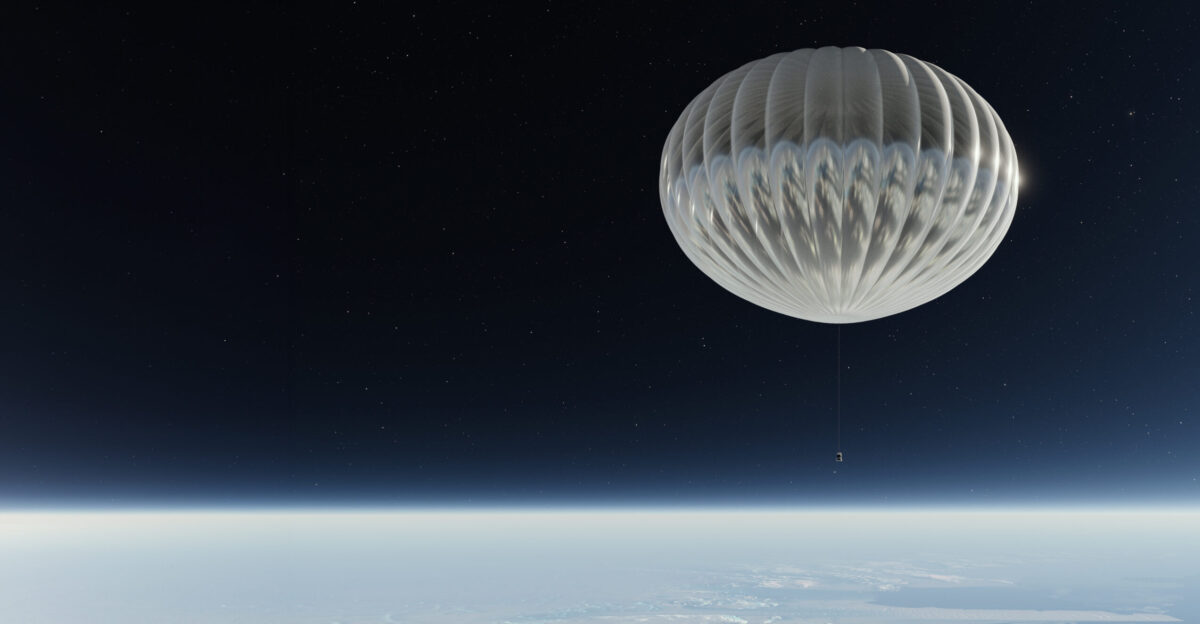
The signals appeared to come from deep within Antarctica’s massive ice sheet, possibly even from beneath it. This region already fascinates scientists because it holds ancient air bubbles, hidden mountains, and potential microbial life. Now, the signals have made it even more compelling.
Countries and universities are eager to explore this icy frontier using next-generation sensors. The continent’s quiet isolation allows detectors to pick up faint signals that would otherwise be lost elsewhere. What was once a frozen wasteland is rapidly becoming a hub for groundbreaking discoveries in both particle physics and Earth science.
Scientists Admit They Don’t Know

Physicists take pride in understanding how things work. So when ANITA’s results showed something that defied explanation, many were left perplexed. That honesty struck a chord in the scientific community. Teams across the globe began reviewing their data and running simulations, but nothing fit.
The signals refused to match any known cosmic or atmospheric event. The lack of answers has kept scientists awake at night, but it has also energized them.
Other Observatories Join In
Following the discovery, major observatories quickly joined the investigation. The Pierre Auger Observatory in Argentina and the IceCube Neutrino Observatory at the South Pole searched through mountains of data for similar anomalies. None found a match.
This ruled out most standard explanations, like high-energy neutrinos or cosmic rays. The results only deepened the puzzle. These findings increased the urgency to build new tools capable of resolving the mystery once and for all.
Physics Faces a Crossroads
The ANITA mystery arrived during a crucial era in physics. Scientists were already struggling to explain dark matter and why neutrinos have mass. The Antarctic signals added yet another unsolved problem. Together, these anomalies suggest the Standard Model, the framework describing all known particles, might be incomplete.
Some physicists now argue that we are on the verge of discovering new types of particles or forces. ANITA’s data may prove to be a vital piece in rewriting how we understand the universe at its smallest scales.
Not Neutrinos After All
At first, many thought neutrinos, tiny, nearly massless particles, were behind the unusual readings. However, continued analysis by Wissel’s team revealed that this couldn’t be true. That forced scientists to widen their search.
Theories now range from unknown cosmic particles to completely new physics beyond what the Standard Model can describe. Each possibility raises profound questions: What else is out there? And could we be glimpsing a new side of the universe?
Heated Debate Among Scientists
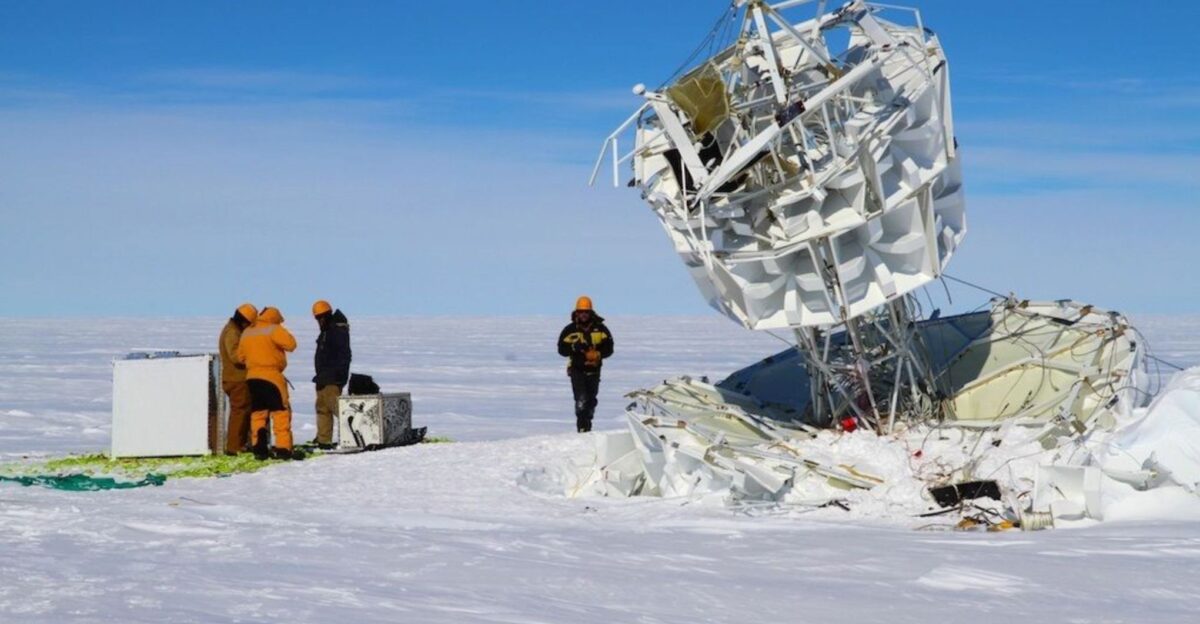
The lack of a clear explanation has split the scientific community. Some experts believe that the impossible signals result from known phenomena we just don’t fully understand yet. Others think they’re evidence of something completely new in physics. Heated discussions have erupted at international conferences, with some researchers calling for extreme scrutiny of the data and others urging bold new thinking.
The ongoing debate shows how science thrives on doubt, especially when faced with something that challenges everything we think we know about the universe.
Wissel Leads the Search
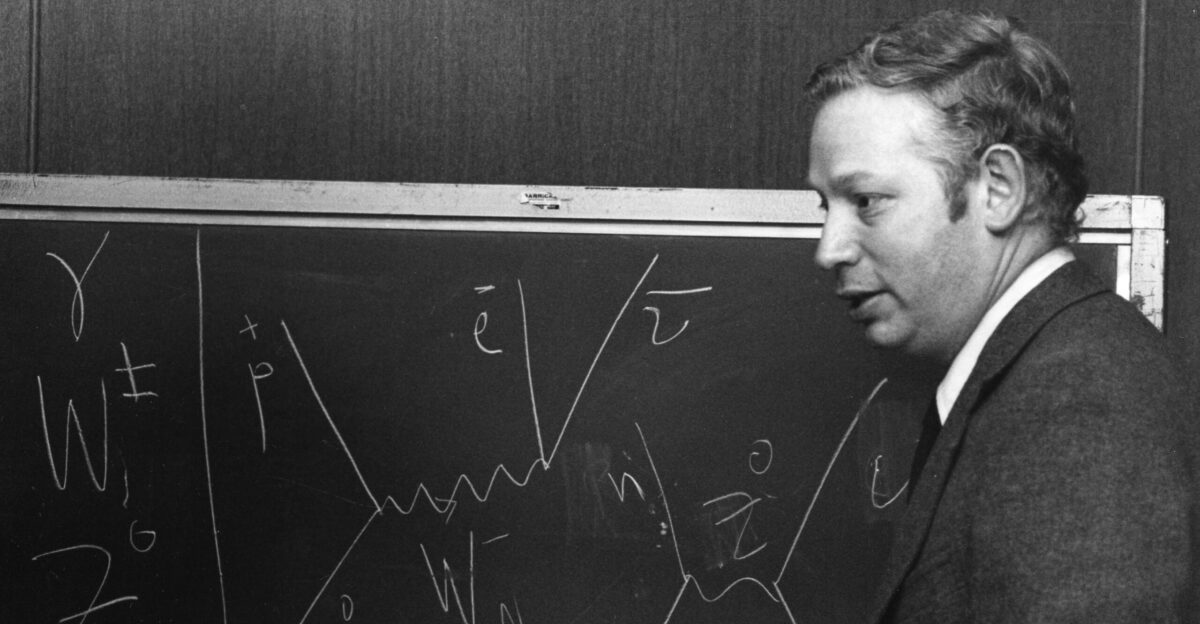
At the center of this global investigation stands Dr. Stephanie Wissel, a physicist from Pennsylvania State University. As one of the lead researchers on ANITA, she has become a key voice in striking a balance between skepticism and curiosity.
Her team continues to reanalyze every piece of data, sharing results openly with the global science community. “We have to stay transparent,” she said, “because the truth, whatever it is, will come out through data.” Wissel’s leadership is widely respected for emphasizing collaboration and honesty, even under pressure to deliver answers fast. Her approach is setting new standards for openness in high-stakes research.
Building a Better Detector
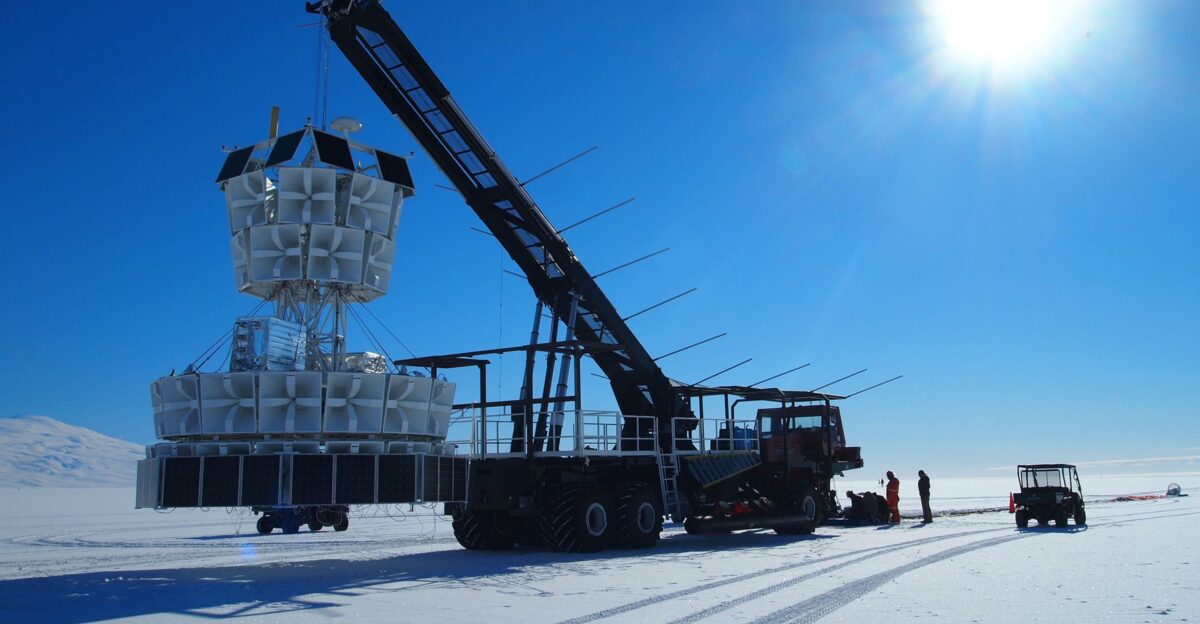
To solve the puzzle, NASA and its partners are now developing a follow-up project called the Payload for Ultrahigh Energy Observations (PUEO). This next-generation balloon will be equipped with more sensitive detectors than ANITA, capable of catching even fainter radio waves.
The mission is scheduled for launch after 2025 and is expected to fly higher and longer over Antarctica. Scientists are hopeful that PUEO will capture more of the elusive signals and finally reveal their origin.
Doubt Still Hangs Over the Data
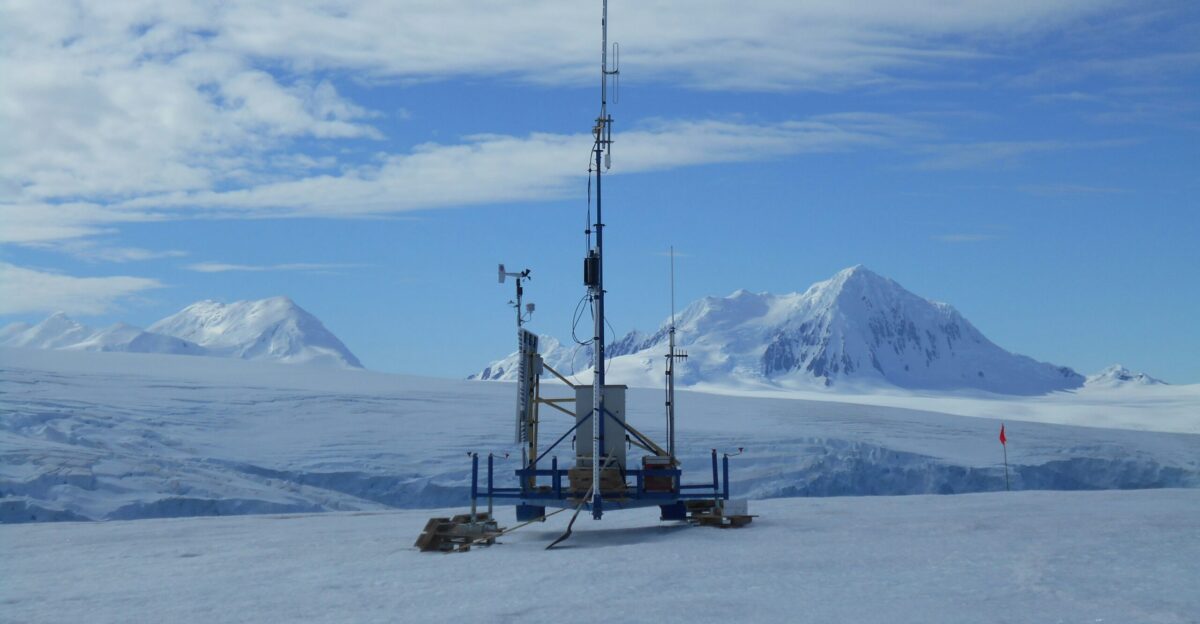
Even with new technology on the horizon, many physicists remain cautious. Some believe the original ANITA signals could be the result of rare atmospheric effects or small instrumental errors that have yet to be identified.
Still, others argue that ANITA’s repeated findings are too consistent to be dismissed. This healthy skepticism is pushing the team to double-check every detail before drawing conclusions that could change science forever.
Searching for the Source
What exactly caused the mysterious upward-moving signals? Scientists are now using complex computer simulations and ice-penetrating sensors to probe Antarctica’s depths. Each new test brings them a little closer to understanding what lies beneath the ice. “Whatever it is, it’s teaching us something new about high-energy physics,” said Wissel.
As new detectors like PUEO arrive and the data grows, the world watches closely. The answer could reveal something fundamental about how energy and matter behave in extreme conditions, or it could uncover a whole new side of our planet.
Shifting Science Budgets

The ANITA mystery has also changed how funding agencies think about research. NASA and the National Science Foundation have both increased support for high-risk, high-reward projects, studies that might fail but could also lead to major discoveries.
The anomaly proved that real progress sometimes comes from chasing the unexplained. Antarctica is now a priority zone for cutting-edge physics, where curiosity-driven science takes center stage.
Science Without Borders
The search for answers has inspired international collaboration on an unprecedented scale. Teams from the United States, Argentina, Europe, and Japan are sharing data from their observatories and satellites. This cooperation goes beyond science. it’s becoming a symbol of shared human curiosity.
Researchers agree that solving this puzzle will require global teamwork, combining expertise in physics, engineering, and environmental science to understand what’s truly happening beneath the ice.
Protecting Antarctica’s Fragile Lab
As interest in Antarctic research grows, so does concern for protecting its untouched environment. The continent offers one of the cleanest and quietest places to conduct sensitive experiments, but too much human activity could spoil that.
Scientists and policymakers now emphasize the need for stricter environmental guidelines for future missions. Preserving its purity ensures that the next generation of scientists can continue exploring without interference or damage to the ice and wildlife.
A New Openness in Science
The ANITA case has reshaped how scientists communicate with the public. Instead of hiding behind technical jargon, many researchers now welcome uncertainty as part of the process.
This honesty is improving public trust and drawing more people into the scientific conversation. By being transparent about mistakes and exploring bold ideas, science moves forward stronger than before. The Antarctic anomaly has become a powerful example of both intellectual humility and innovation.
The Wonder Beneath the Ice

The story of Antarctica’s mysterious radio signals is more than just a physics puzzle, it’s a poignant reminder of how much of our universe remains unexplored. Beneath that endless sheet of ice may lie the next great discovery in science.
Whether the signals turn out to be a new type of particle, a hidden natural process, or something we can’t yet imagine, they prove one thing: the universe still holds secrets worth chasing. As new instruments go up and theories evolve, the world waits for the next spark of discovery from the coldest place on Earth.