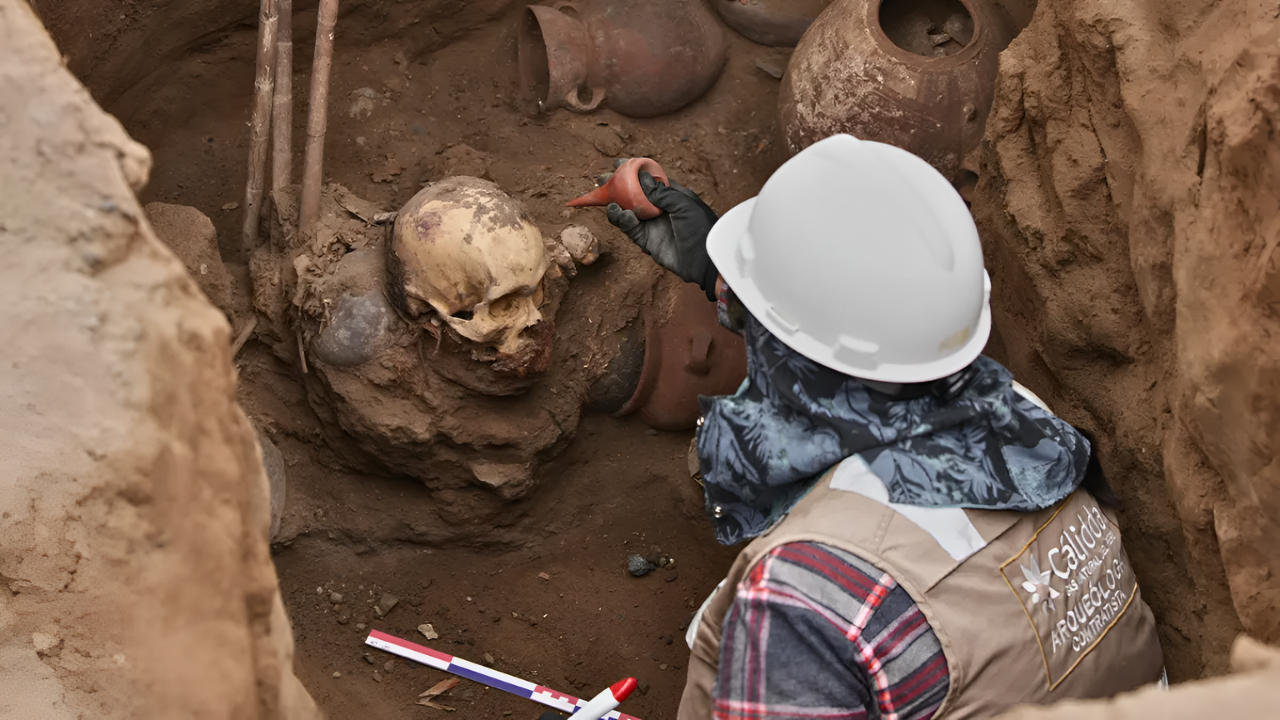
Archaeological teams excavating the site of Poland’s new Centralny Port Komunikacyjny (CPK) airport near Baranów have uncovered traces of human activity spanning 7,000 years, from Neolithic farmers to early modern settlers. This vast dig, mandated before construction disrupts the soil, reveals a continuous thread of life in central Poland, hidden beneath fields destined for runways and rails.
Hidden Depths
Located 31 miles west of Warsaw, the CPK site forms the core of a massive transport network integrating air, rail, and road links. What appears as a modern hub on maps has instead offered archaeologists expansive, connected excavation zones. Teams have systematically peeled back layers, yielding a profusion of artifacts that mark the area as one of the region’s richest archaeological troves.
The site preserves remnants from multiple epochs in a single location, described by experts as exceptional. Neolithic farmers left tools and storage pits around 5200–1900 BC. Bronze Age inhabitants crafted metal ornaments and ceramics. Iron Age Lusatian and Przeworsk cultures built half-sunken houses and kilns. Medieval villagers dug wells, while early modern families used clay pipes and household tools. This repeated occupation by diverse groups traces shifts in technology, agriculture, and society over millennia.
Rescue Before Runways
European regulations demand archaeological surveys prior to major infrastructure projects. At CPK, this triggered a comprehensive rescue operation from October 2023 through 2026, halting earthmoving until completion. Field crews face intense pressure to document finds meticulously within the timeline, balancing precision with urgency as construction looms.
Core discoveries span roughly 7,000 years. Deepest layers hold flint blades, stone tools, and wooden structure traces from Neolithic crop cultivators. Above lie Bronze Age pits with burnt earth, pots, weapons, and trade goods signaling metallurgy and exchange networks across Central Europe. Iron Age evidence includes trash pits, burials, and production sites, refining knowledge of Mazovian settlements. Upper strata feature medieval coins, fireplaces, glass, and imported items, illustrating farmsteads tied to broader markets. Radiocarbon dating, tree-ring analysis, and X-ray scans on organics, wood, and metals confirm the chronology without damage.
First Farmers’ Footprints
Neolithic remains at the base of key trenches indicate central Poland’s early adoption of farming. Storage holes and simple buildings suggest organized food production and settlement. These finds illuminate how agriculture took root in the region, drawing communities to this fertile ground long before recorded history.
Overlying layers expose Bronze Age complexity: storage for surpluses, specialized crafts, and long-distance ties evident in ornament styles. Burnt soils and weapons point to advanced techniques, hinting at social hierarchies and trade that connected local people to wider European patterns.
Cultures in the Soil
Iron Age layers from Lusatian and Przeworsk groups reveal domestic life through post holes, kilns, and graves. These add precision to maps of their territorial spread in Mazovia, shedding light on interactions with distant neighbors via traded goods.
Medieval and early modern topside features—wells, tools, pipes, and coins—depict evolving rural economies linked to trade routes. Trenches bridge prehistoric pits to purchased wares, offering a rare vertical snapshot of daily continuity.
Precise timelines rely on lab analysis: C14 on organics, dendrochronology on timber, and non-destructive imaging. Anthropologists and conservators process samples post-excavation, building a robust sequence from thousands of tested items.
Heritage Guardians
The Mazovian Provincial Heritage Protection Office oversees the work, with Senior Inspector Joanna Gawrońska noting its exceptional scientific value. They issue permits, enforce standards, and coordinate preservation amid development pressures.
CPK leadership views the surveys as both obligation and opportunity. Board member Dariusz Kuś emphasizes reaching all potential trace areas pre-construction, framing the artifacts as national heritage. Early integration of digs supports transport ambitions without sacrificing history.
From Field to Museum
Post-documentation, artifacts head to museums under the Mazovian conservator’s direction. Stabilization ensures longevity for display, potentially reshaping public perceptions of the airport as a gateway over ancient ground.
This excavation underscores rescue archaeology’s role in large projects, preserving narratives of settlement and exchange. As global infrastructure expands, sites like Baranów demonstrate how pausing for the past can inform sustainable futures, prompting other nations to embed such practices in their builds.
Sources:
Global Construction Review, Major dig at Poland’s new airport unearths trove dating back 7,000 years, 2 Dec 2025
IndustryRadar, CPK Airport site reveals 7,000 years of history, 3 Dec 2025
Earth com, 7,000 years of human history discovered under an airport construction site, 15 Jan 2026
CPK / Port Polska, CPK preserves the archaeological heritage of its investment areas, 2025
Instagram (Earth.com), Uncovering 7000 Years of History at Poland’s Future CPK Airport, 25 Dec 2025
Explorator, 7,000 years of human history found under airport construction site – Earth com, 17 Jan 2026