In the heart of Poland, a group of amateur archaeologists stumbled upon a treasure trove of ancient artifacts, transforming their summer adventure into a groundbreaking archaeological discovery. The Denar Kalisz metal detecting club, led by Przemysław Kurowiak, had initially set out to find remnants of World War II rockets. Instead, they unearthed a collection of medieval silver bars, coins, and ornaments, along with a stunning gold necklace from the Roman era. This unexpected find not only captivated the world but also shed new light on Europe’s early history, revealing extensive trade networks and cultural exchanges across the continent.
Uncovering the Past
Denar Kalisz is not a professional archaeological team but a group of friends united by their passion for history. For over two decades, they have been exploring Poland’s fields and forests, uncovering lost pieces of history with dedication and respect. Their commitment has earned them admiration across Poland, as they treat every artifact like a time capsule. “Our association is a group of friends who love uncovering history,” said Kurowiak. “We do it as a hobby.”
The team’s journey took a dramatic turn in June when member Hubert Piasecki discovered a clay pot buried nearly half a meter underground. Inside, they found glittering silver bars, coins, and beautifully crafted ornaments, totaling 631 individual items. Experts dated these artifacts back to the early Middle Ages, over a thousand years old. The find immediately drew the attention of archaeologists and historians. “The pot was filled with coins, ornaments, and silver ingots from the early Middle Ages, containing 631 artifacts,” Kurowiak explained.
A Window into Medieval Europe
The coins found in the pot tell a story of extensive trade across Europe. Some coins originated in England, Germany, Hungary, and the Czech regions, showcasing how connected Europe was during the Middle Ages. Historians have documented such wide-reaching commerce through numerous coin hoards discovered across Central and Eastern Europe. These coins reveal that people and goods once traveled between places rarely thought to be linked. Poland’s location along ancient trade routes, including the Amber Road connecting the Baltic Sea to the Roman Empire, facilitated such exchanges.
Beyond coins, the team uncovered silver ornaments and ingots that were carefully shaped and crafted with artistry. These pieces demonstrate that early European craftsmen were highly skilled, turning raw silver into beautiful jewelry and valuables. Each piece tells a story of craftsmanship and wealth from a time long before mass production. The items likely belonged to wealthy merchants or nobles, hidden during times of conflict and never recovered until now.
Roman Influence in Polish Soil
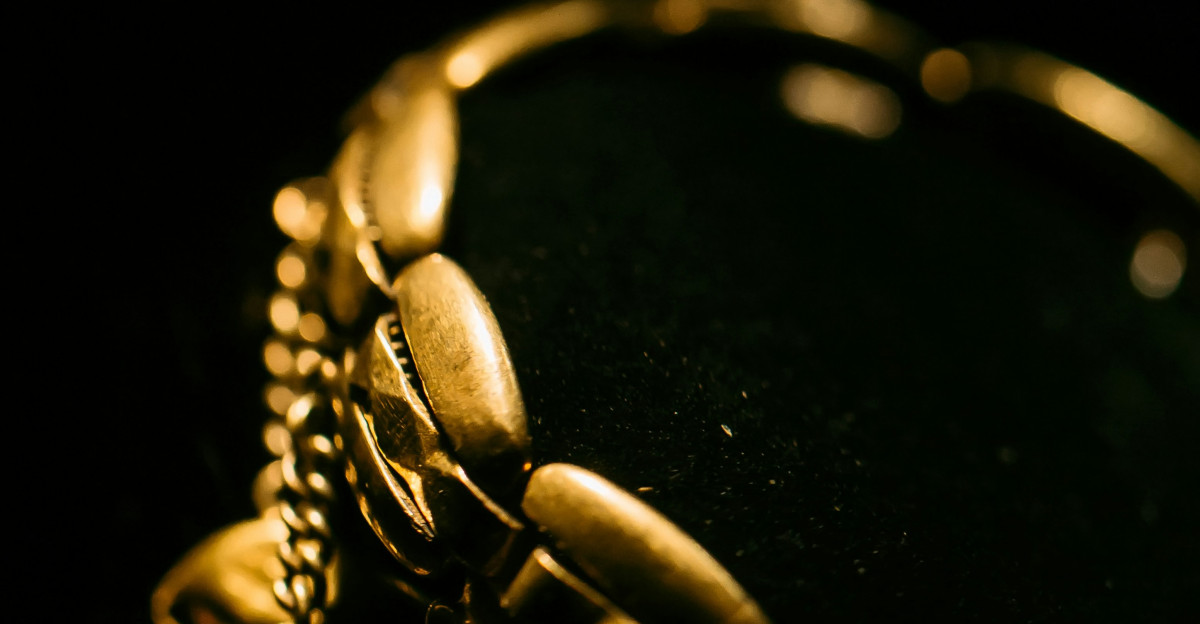
The biggest surprise came when team member Mateusz Lachowicz unearthed a gleaming gold necklace weighing 222 grams. Experts believe it dates back nearly 1,800 years, to a period influenced by Roman culture. Its craftsmanship is exceptional, with the gold still brilliant after centuries underground. This necklace links modern Poland to ancient empires, showing how far-reaching Roman influence really was. “And just when it seemed we couldn’t get any luckier, we came upon another treasure – an incredible one, containing a gold necklace (222 grams of pure gold) from the Roman influence period, possibly up to 1,800 years old,” said Kurowiak.
Finding Roman-period jewelry in central Poland proves that ancient trade routes stretched far across Europe. During the first centuries AD, Roman merchants traveled north, exchanging goods with local tribes. The necklace and other fragments unearthed nearby offer real evidence of these cultural connections.
Preserving the Past for the Future

When important finds are discovered, the next step is ensuring they are protected and available for everyone to see. Teams like Denar Kalisz don’t keep their treasures for themselves; they hand them over to local authorities for careful study and display. The gold necklace will be transferred to the Kalisz Regional Museum, where specialists will analyze and preserve it before public display. Museums play a vital role in telling these artifacts’ stories and making sure they’re safe from damage.
Preserving ancient treasures isn’t just about putting them in glass cases; it takes knowledge and care. Specialists use gentle cleaning methods and advanced technology to prevent damage and keep objects from deteriorating. For very old or delicate items, scientists sometimes use three-dimensional scanning to record their shapes without touching them. Only through careful preservation can these treasures remain part of our shared story.
Inspiring Future Discoveries
Poland has seen multiple significant archaeological discoveries in recent years, and the story of Denar Kalisz inspires new generations to explore history with care and curiosity. Their journey shows how passion can lead to unexpected greatness, transforming ordinary people into history makers. With every artifact found, the group has inspired thousands to value their heritage and wonder what mysteries remain. “We’re very proud of this, and it gives us even greater confidence that what we’re doing is right and important,” said Kurowiak.
Looking forward, the discoveries by Denar Kalisz and similar groups underscore the importance of responsible exploration and collaboration between amateur and professional archaeologists. As the world continues to uncover its hidden past, these finds not only enrich our understanding of history but also highlight the potential for future discoveries that could reshape our knowledge of ancient civilizations. With each new find, the excitement builds, and the anticipation for what else lies buried nearby becomes a testament to the enduring allure of history waiting to be uncovered.