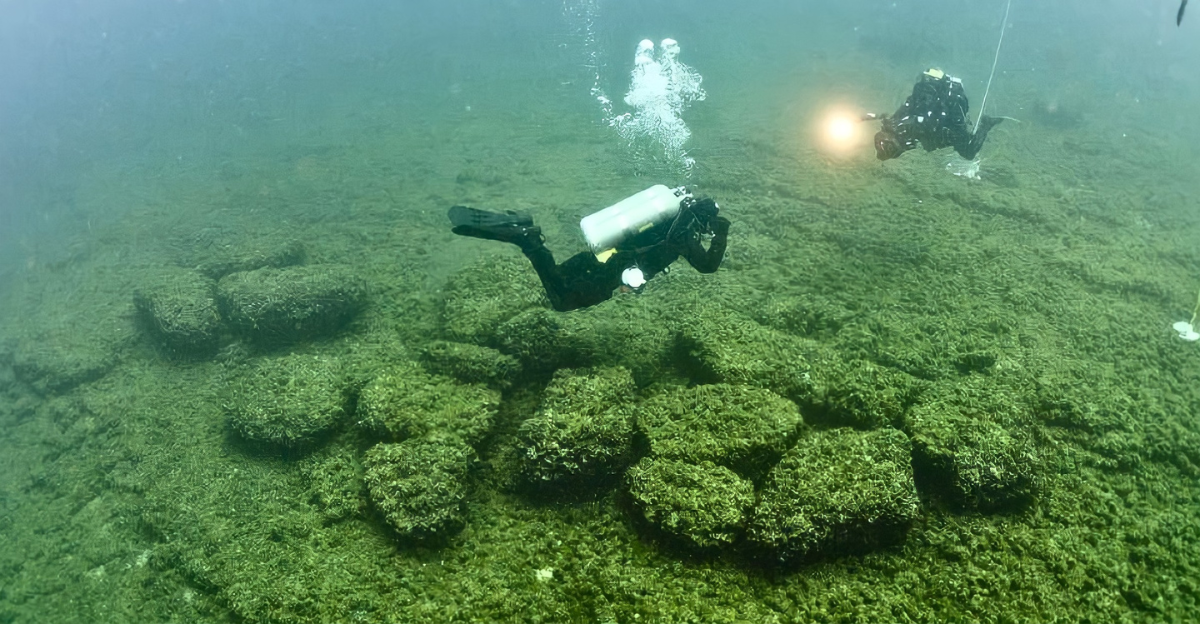
You’ve heard of Stonehenge. Massive stones, mysterious origins, and endless theories. But what if there was something even older, right in North America?
At the bottom of Lake Michigan, researchers stumbled upon a discovery that might rewrite parts of ancient history. A submerged stone structure was found, not in England, but in the Midwest. And its age? That’s where things get interesting.
Not What They Were Looking For
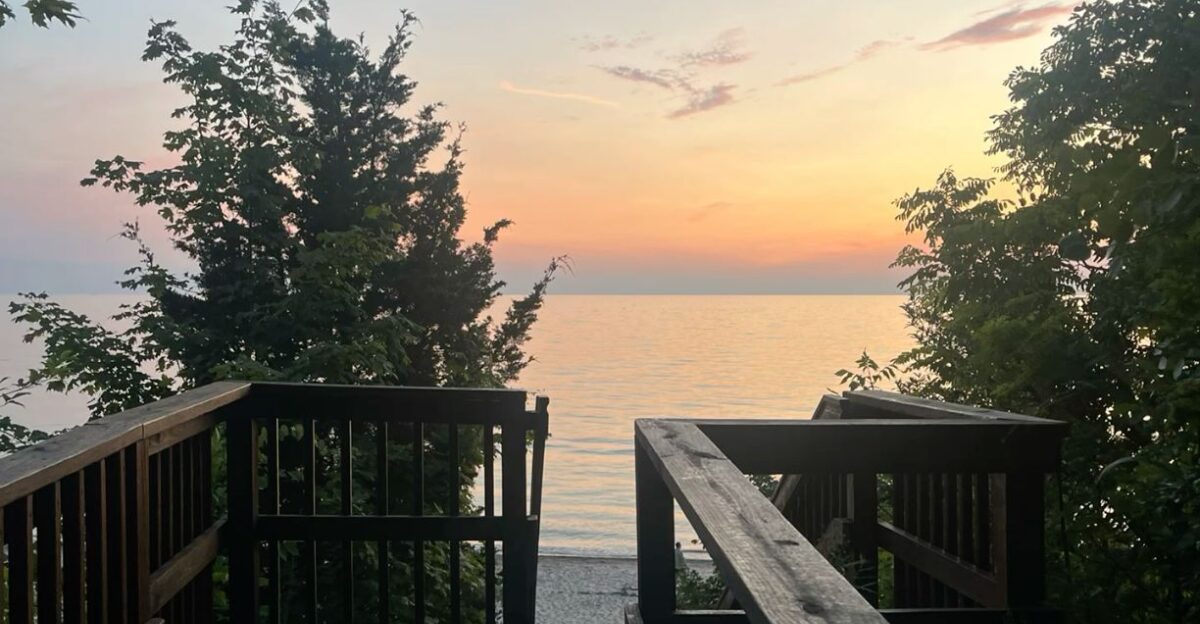
In 2007, a team of researchers from Northwestern Michigan College was scanning Lake Michigan’s floor. They were originally mapping shipwrecks in Grand Traverse Bay.
But during one of their sonar sweeps, they noticed something unusual: shapes that didn’t look like natural rock formations. Something arranged. Something deliberate.
A Strange Shape on the Sonar
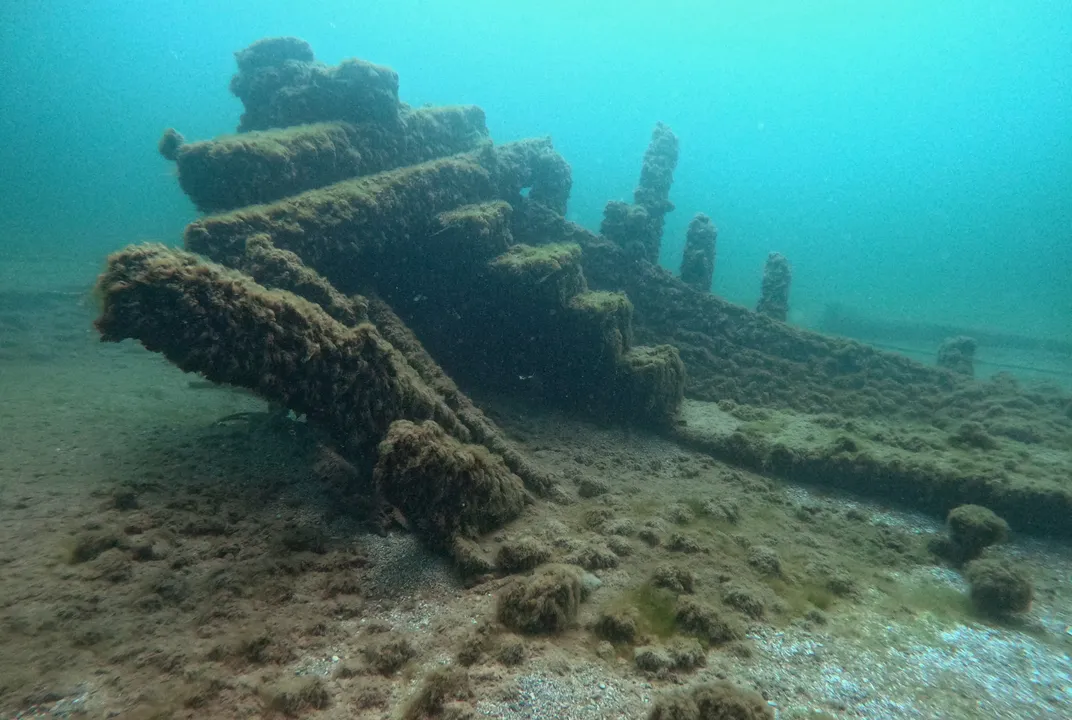
What the sonar showed wasn’t just a pile of rocks. It resembled a circle: like something that had been placed there on purpose.
The idea of a stone circle under a Great Lake was strange enough. But it was what they found next that really raised eyebrows.
Stone Circle Beneath the Waves
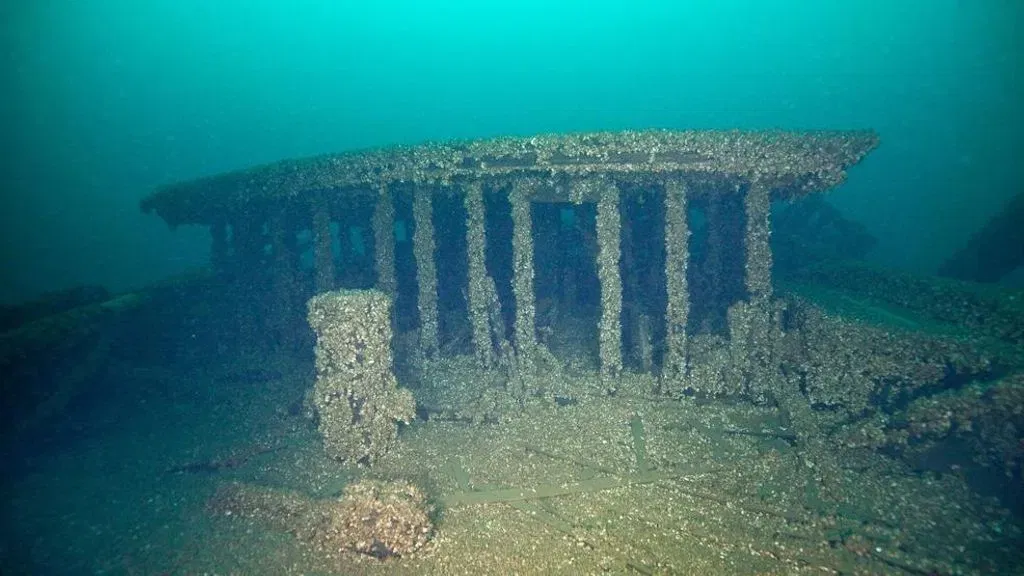
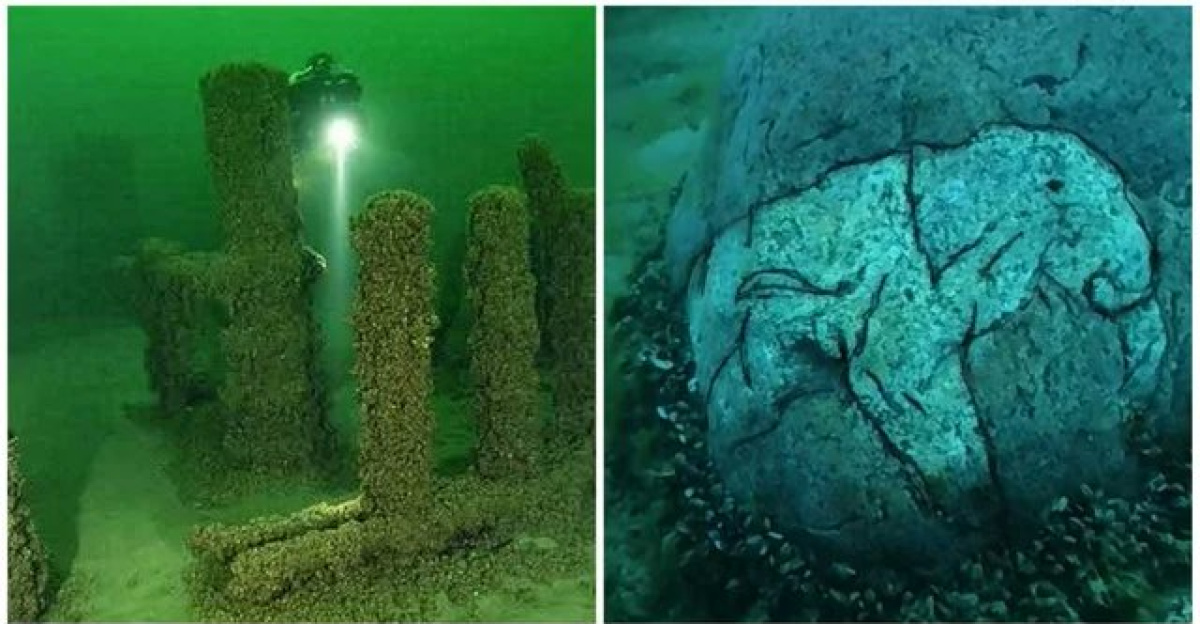
Divers went down to investigate. Sure enough, a circle of large stones lay on the lakebed. Some of the stones appeared to have markings or carvings.
The structure was underwater, about 40 feet below the surface. Nothing this intentional had ever been found in this part of the lake.
One Carving Stood Out
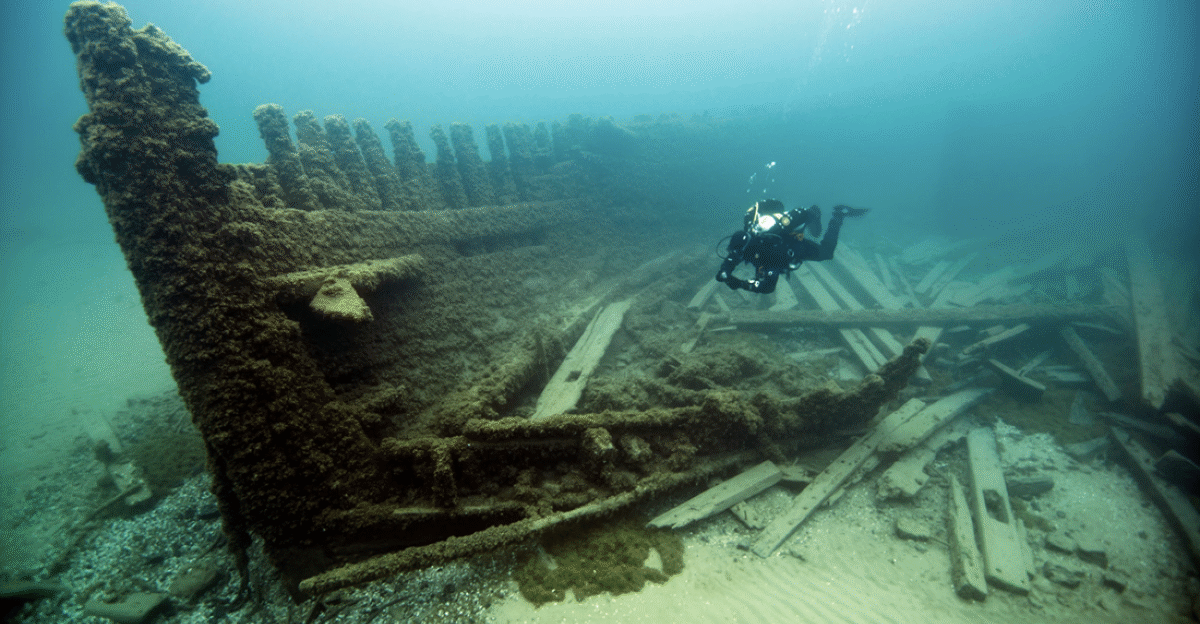
On one of the stones, divers spotted what looked like an ancient carving. It resembled a mastodon: an extinct Ice Age mammal, similar to an elephant.
If that carving was real, and not a trick of erosion, it would date the structure to at least 9,000 years ago, around when mastodons still roamed North America.
Why That Date Matters
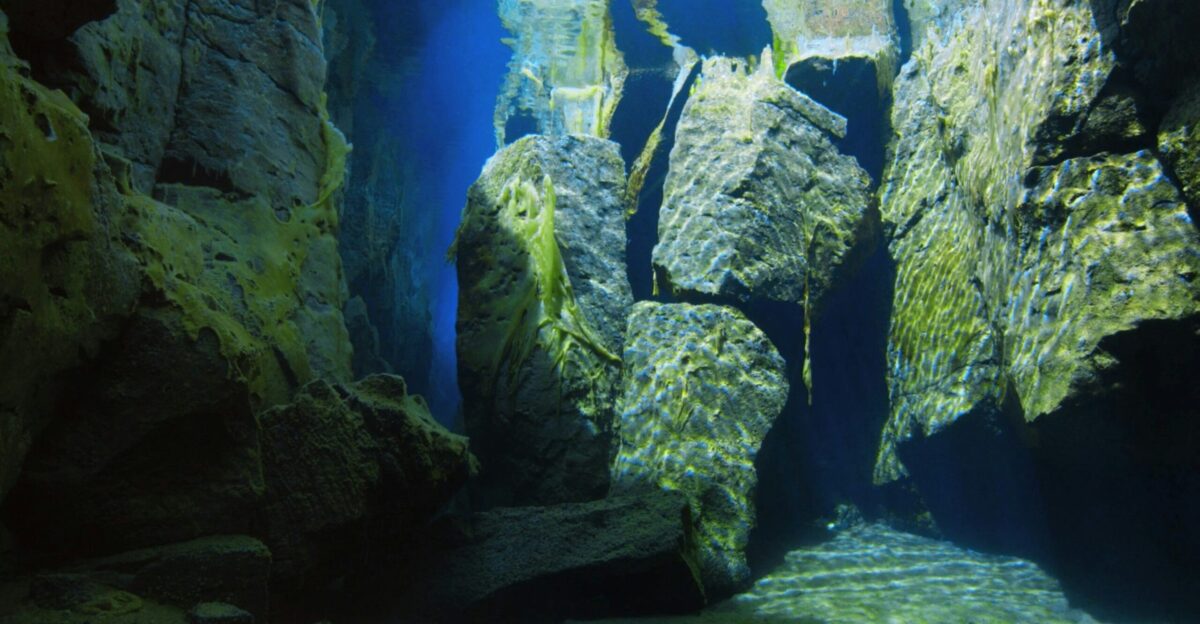
To put it in perspective: Stonehenge was built around 5,000 years ago. This underwater structure, if the dating holds, could be nearly twice as old.
That would make it one of the oldest known man-made structures in North America and maybe even the world.
Not Just the Mastodon

Some reports claim that another stone bears the image of a cobra, an animal not native to North America.
This detail, though not confirmed, adds more complexity to the mystery. If true, it raises the possibility of cultural symbols, migration, or shared knowledge across early civilizations.
Who Could Have Built It?
If the stone circle is 9,000 years old, it would have been created by Paleo-Indians, the early inhabitants of the Great Lakes region.
They were primarily nomadic hunter-gatherers. But could they have organized and constructed such a complex structure? That’s still debated.
Theories Behind Its Purpose

No one knows exactly what the structure was used for. Some researchers suggest it may have been a hunting drive lane, used to guide animals like caribou.
Others think it could have served a spiritual or ceremonial purpose. Some even wonder if it tracked the movement of stars or seasons.
Built on Dry Land
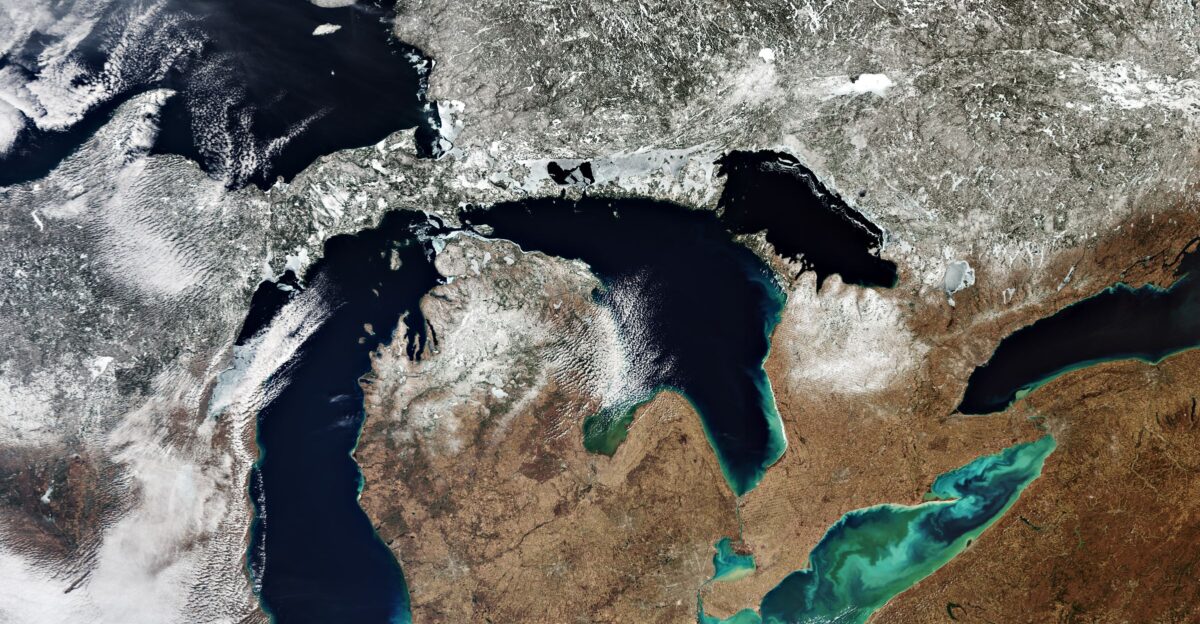
The area where the stones were found was once dry land. Around 9,000 years ago, water levels were much lower, and the Great Lakes were still forming.
That means this structure would have been built on solid ground, later swallowed by the rising waters of Lake Michigan.
Difficult to Study

Because the site is underwater, studying it is expensive and logistically difficult. Visibility is often poor, currents are unpredictable, and detailed excavations require advanced equipment. These challenges have slowed down the research, and much of the site remains unexamined.
Is It Really a Mastodon?
Some archaeologists caution against jumping to conclusions. The mastodon carving, while compelling, hasn’t been independently verified.
Weathering, erosion, or natural marks on the stone could be misleading. The team who discovered it is cautious with their claims but curious enough to want more investigation.
Scientific Community Response
The mainstream archaeological community has mostly reacted with cautious interest. Since the find hasn’t been thoroughly excavated or dated with precision, it remains more of a hypothesis than a confirmed historical breakthrough. Still, the possibility is intriguing enough to spark ongoing interest.
No Formal Excavation Yet
As of now, no large-scale excavation has taken place. Most of what we know comes from sonar images, diver observations, and limited direct analysis.
The site remains underwater, relatively undisturbed, waiting for funding and interest to align for deeper research.
Could There Be More?
Lake Michigan is massive. This find raises an obvious question: what else might be hidden beneath its surface?

The Great Lakes were once home to many early communities. If one site exists, there may be others: undiscovered and preserved under layers of water and sediment.
Challenging Our Timeline
Finds like this challenge the idea that ancient, organized societies only existed in the “Old World.” If proven authentic, it suggests that people in North America may have had complex systems, knowledge, and cultural expressions long before we thought they did.
Cultural Significance

For local Indigenous communities, the find ties in with oral histories about ancestors living near the Great Lakes long ago.
While not definitive proof, discoveries like this add weight to traditions that have often been overlooked in formal archaeology.
Preserving the Site
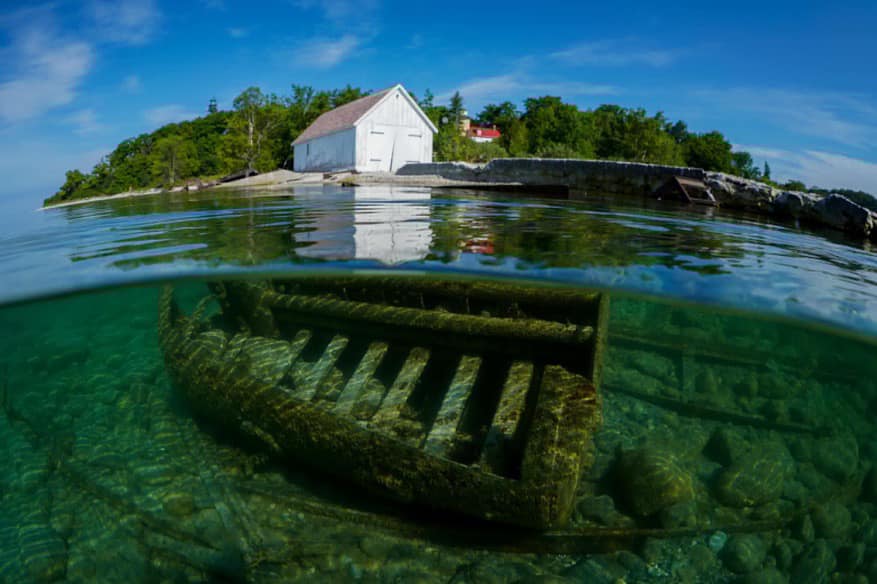
Because it’s submerged, the site is less vulnerable to vandalism or looting than above-ground sites. But it also risks being forgotten.
Researchers hope that continued awareness could lead to protected status or eventual academic funding for further exploration.
Stonehenge… But Different
This structure is hidden, partially buried, and far less understood than Stonehenge, which is above ground and well-documented.
But if the dating and carvings are confirmed, it may be even older, and just as important, for understanding our collective past.
An Ancient Mystery, Still Unsolved
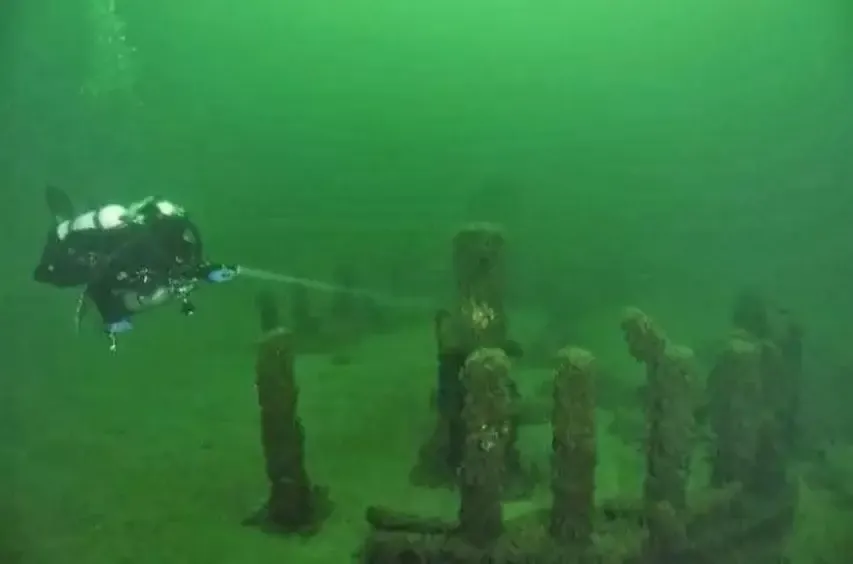
For now, Michigan’s “underwater Stonehenge” remains a mystery. Is it a natural formation? A cultural monument?
A hunting structure? Without more study, we may never know. But one thing’s clear: it’s a reminder that the past still has secrets, even in places we least expect.