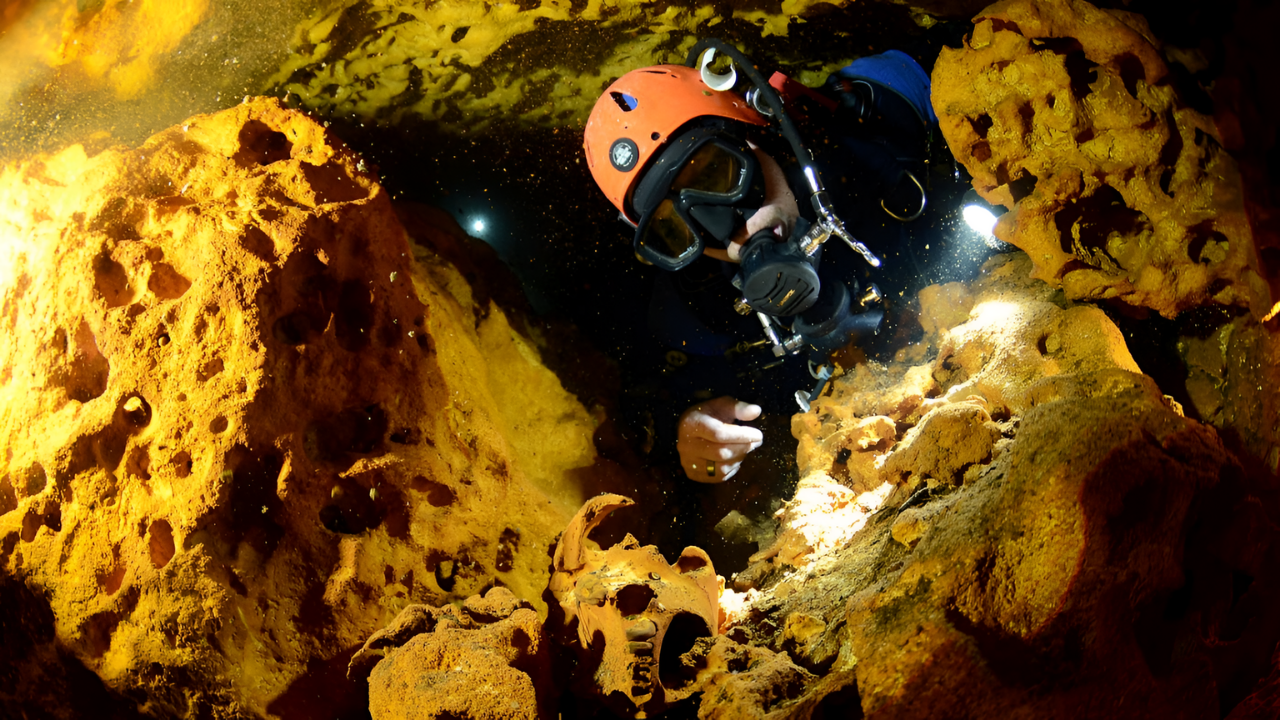
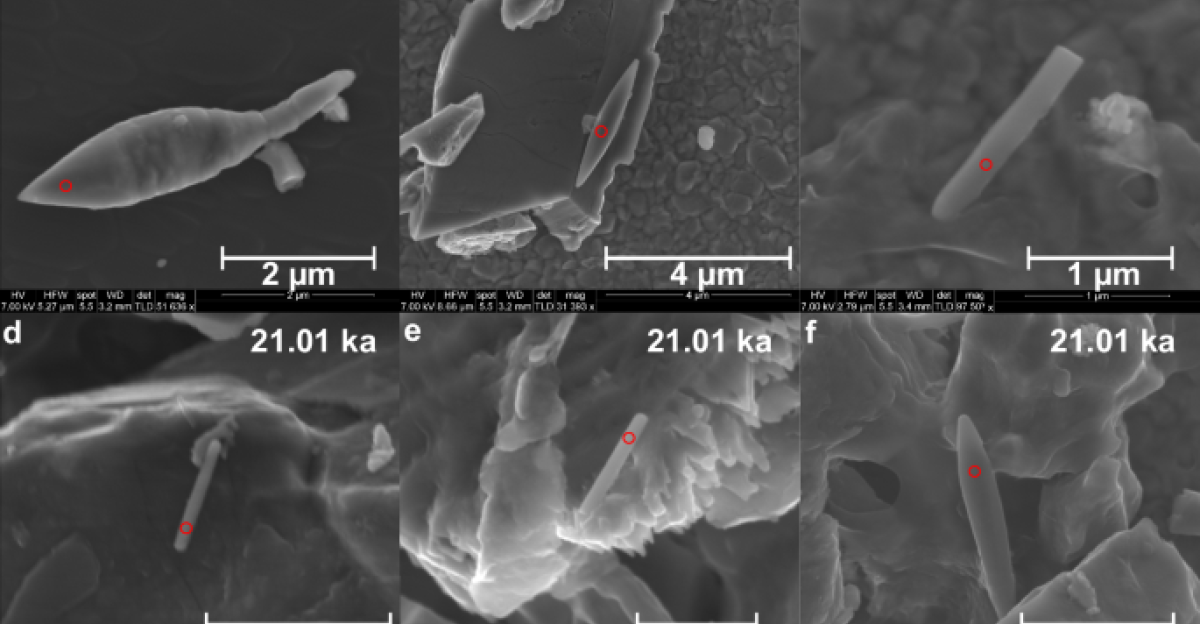
A groundbreaking discovery has emerged from the depths of Earth’s ancient oceans. Researchers have uncovered giant magnetofossils that are 97 million years old.
These magnetofossils contain a remarkable secret: an internal biological GPS-like system. This finding revolutionizes our understanding of ancient marine life and its ability to navigate long distances across the vast ocean.
Unlocking the Mystery of the Fossil
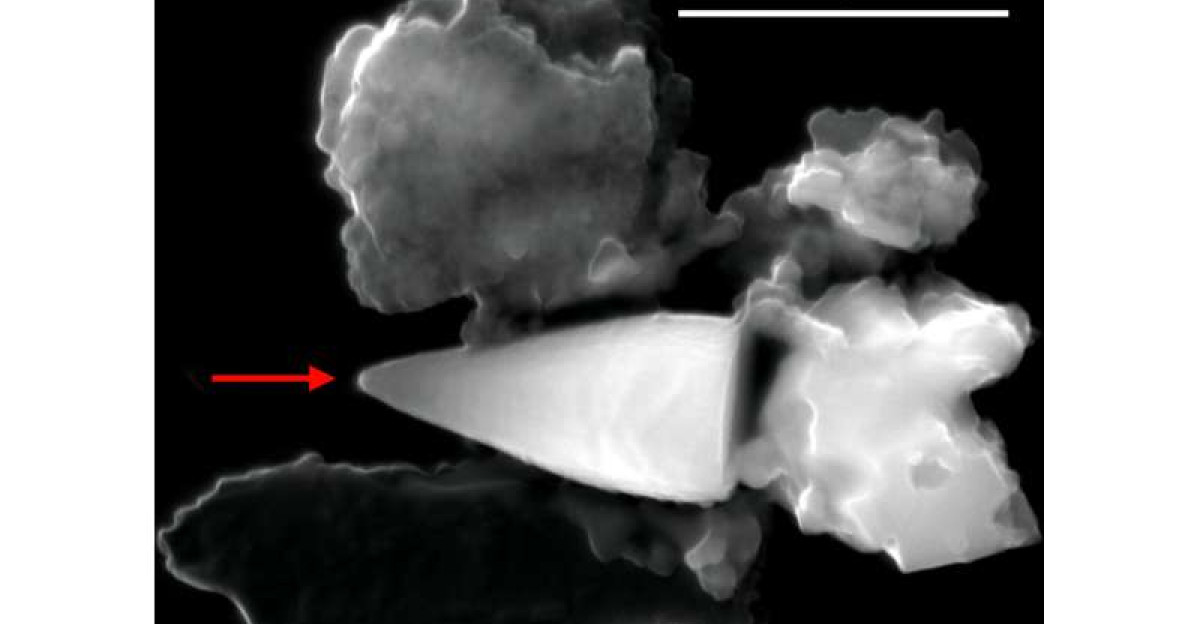
The magnetofossils are far too large to have come from bacteria, suggesting they belong to a much larger, multicellular organism. These organisms were likely capable of detecting the Earth’s magnetic field.
Dr. Richard Harrison from the University of Cambridge explains that this capability enabled these creatures to navigate the oceans with unprecedented accuracy, challenging previous assumptions about magnetoreception in complex animals.
Breaking New Ground with Magnetic Tomography
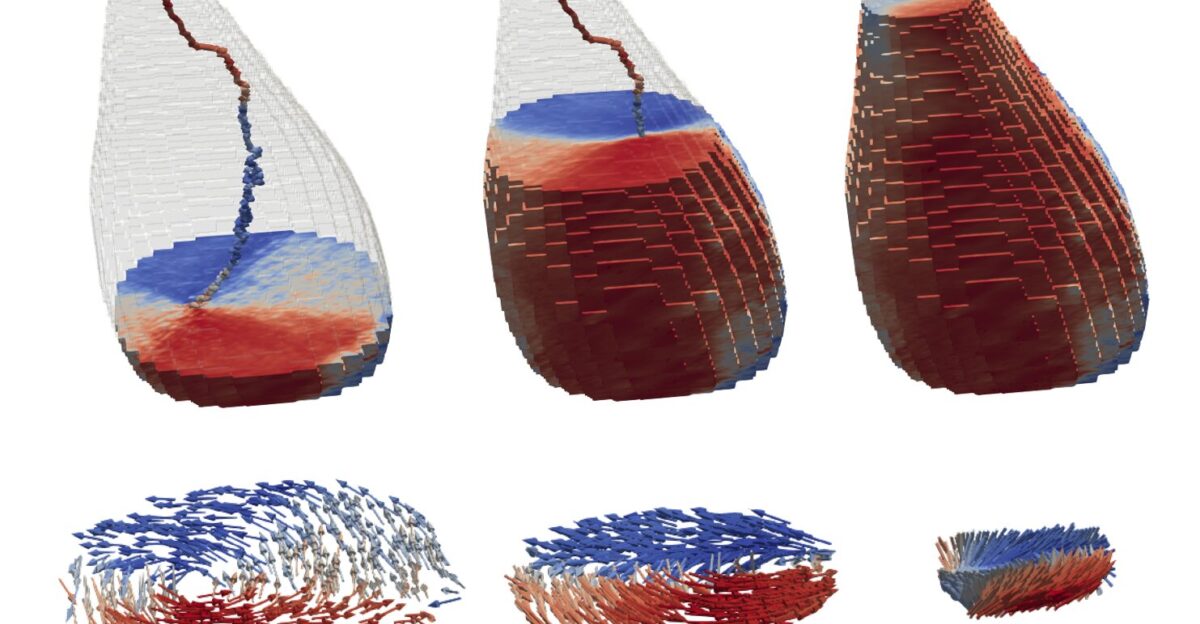
Traditional X-ray imaging couldn’t capture the fine details of these ancient fossils. Enter magnetic vector tomography—a revolutionary technique developed by Dr. Claire Donnelly.
This method allows scientists to map the internal magnetic structure of fossils in 3D without causing any damage. It marks the first-ever application of this technique to natural biological samples, opening new frontiers in paleontology.
A New View into Ancient Navigation
The 3D imaging revealed a unique vortex pattern within the magnetofossils. This formation, likened to a tiny tornado, was crucial for detecting changes in the Earth’s magnetic field.
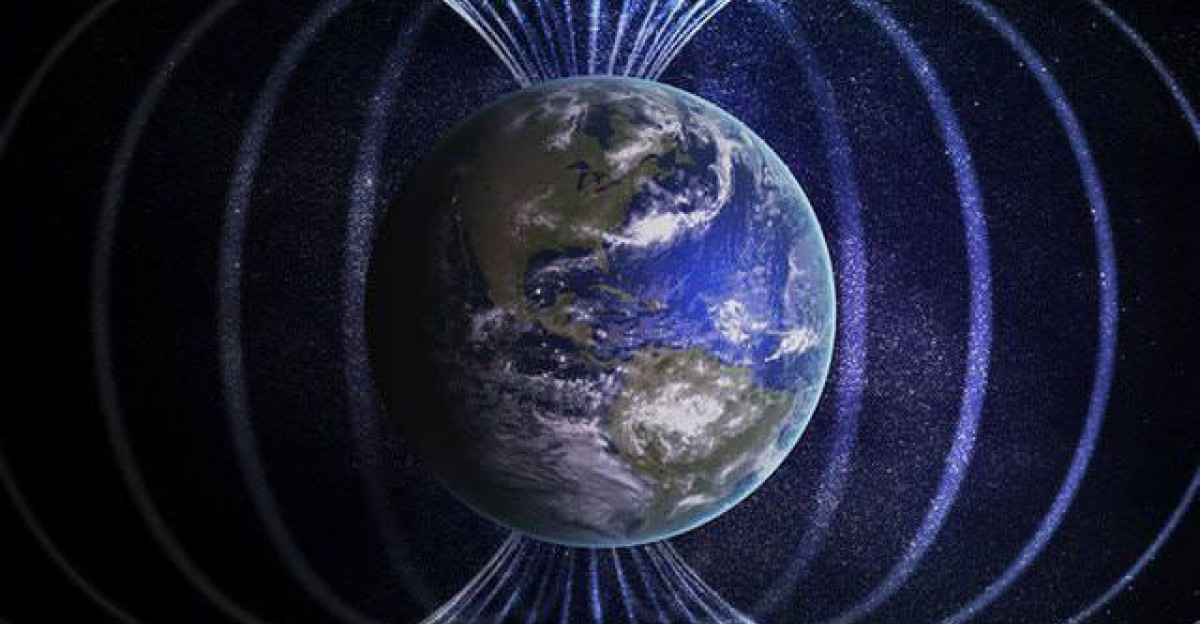
The vortex allowed these creatures to navigate across vast distances, essentially providing them with a built-in compass. This discovery raises the possibility that ancient creatures navigated like modern-day sea turtles or birds.
Who Created These Fossils?
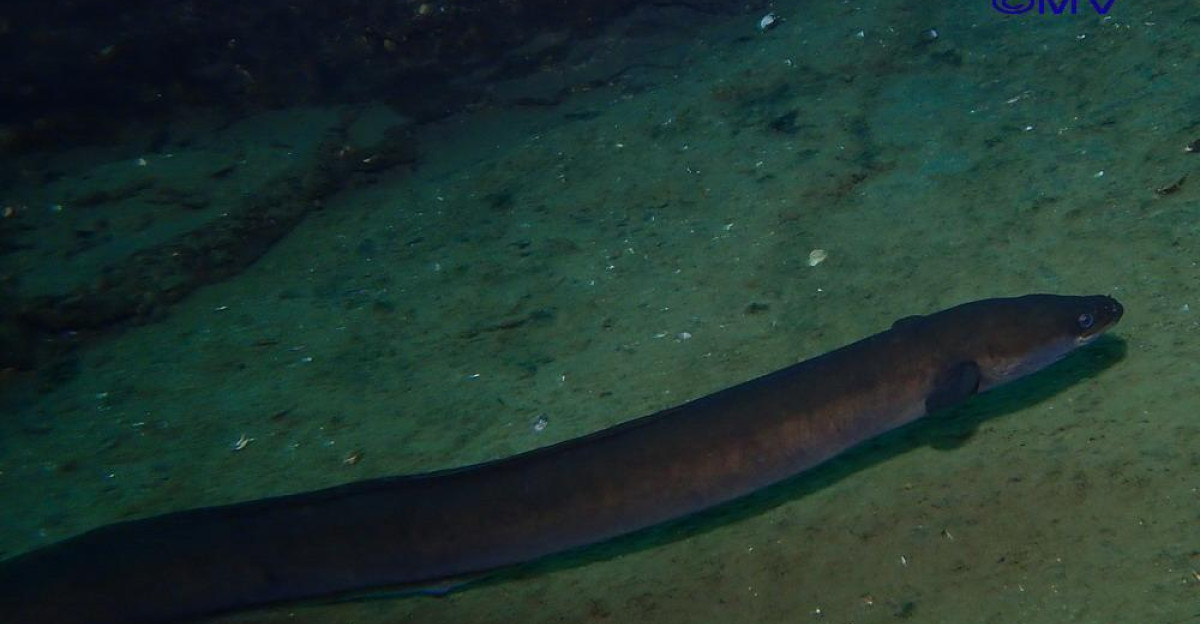
The mystery remains: who or what created these magnetofossils? The likely candidate is an ancient migratory marine animal, such as the eel, known for its long-distance migrations.
These animals, evolving around 100 million years ago, might have inherited this sophisticated navigation ability. However, no definitive link has been established, leaving room for other possibilities.
The Fossil’s Geographic Significance

The fossils were discovered in marine sediments from the North Atlantic Ocean, dating back to about 56 million years ago.
The specific location and environment suggest the creature inhabited deep-ocean regions with limited light. An internal compass would have been essential for navigating these dark, vast expanses, where visual cues were few and far between.
Implications for Modern Animal Navigation
This discovery provides compelling evidence that complex animals have been using magnetic navigation for tens of millions of years.
Modern species like birds and sea turtles use similar abilities to navigate during migration. The ancient magnetofossils suggest that these capabilities were inherited from their distant ancestors, offering new insights into the evolution of animal navigation systems.
A Paradigm Shift in Evolutionary Biology
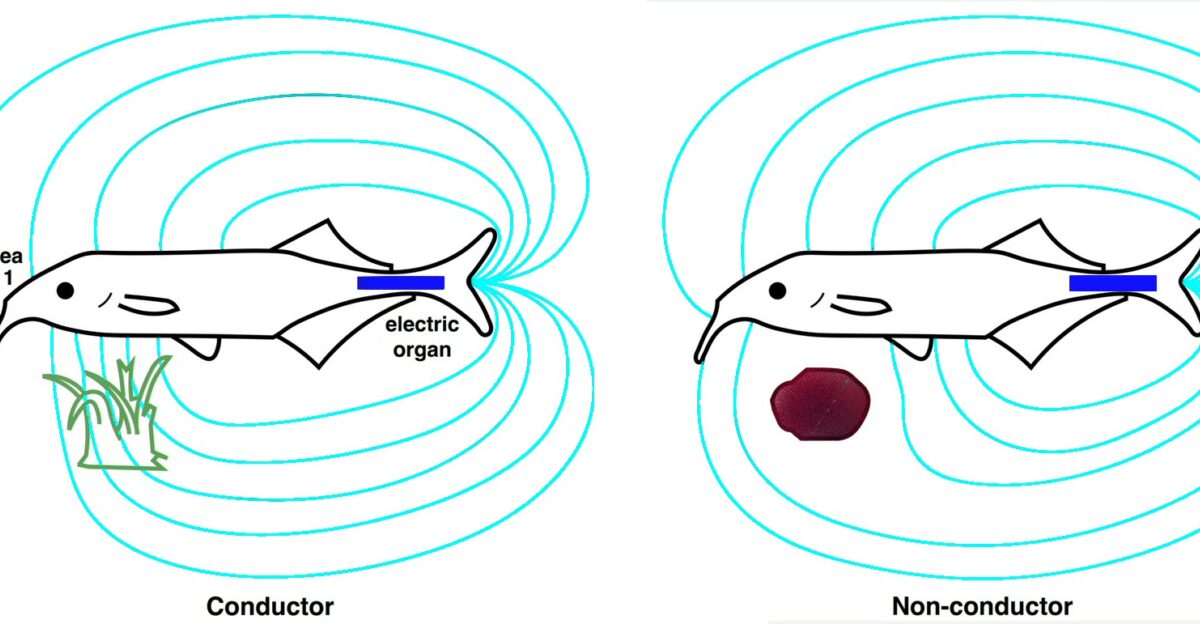
This discovery challenges the belief that sophisticated sensory systems evolved relatively recently. If ancient creatures were using magnetic navigation 97 million years ago, other complex systems like echolocation and electroreception may have even deeper evolutionary roots.
This shifts the timeline of evolutionary biology, suggesting that advanced sensory systems have ancient and deep origins.
Advancing Paleomagnetic Research
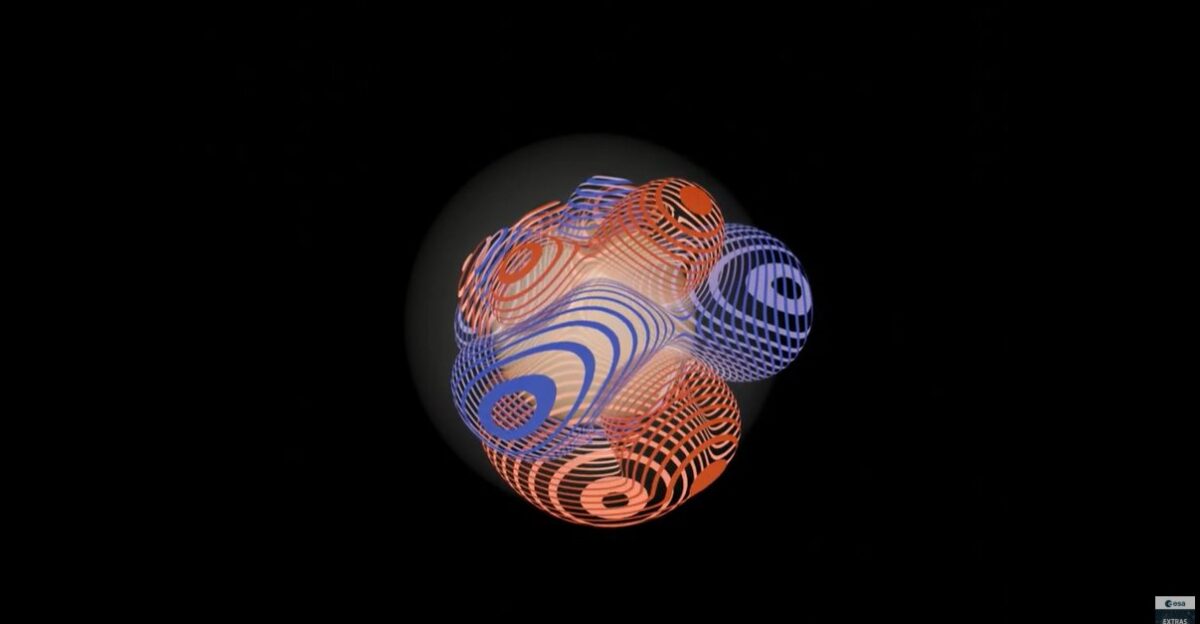
The use of magnetic vector tomography is a breakthrough not just for paleontology, but for all scientific fields. This non-invasive technique opens doors for examining other ancient fossils for hidden magnetic structures.
The method may lead to new discoveries about the behaviors, migration patterns, and sensory abilities of ancient animals, without harming valuable specimens.
The Implications for Mars Exploration
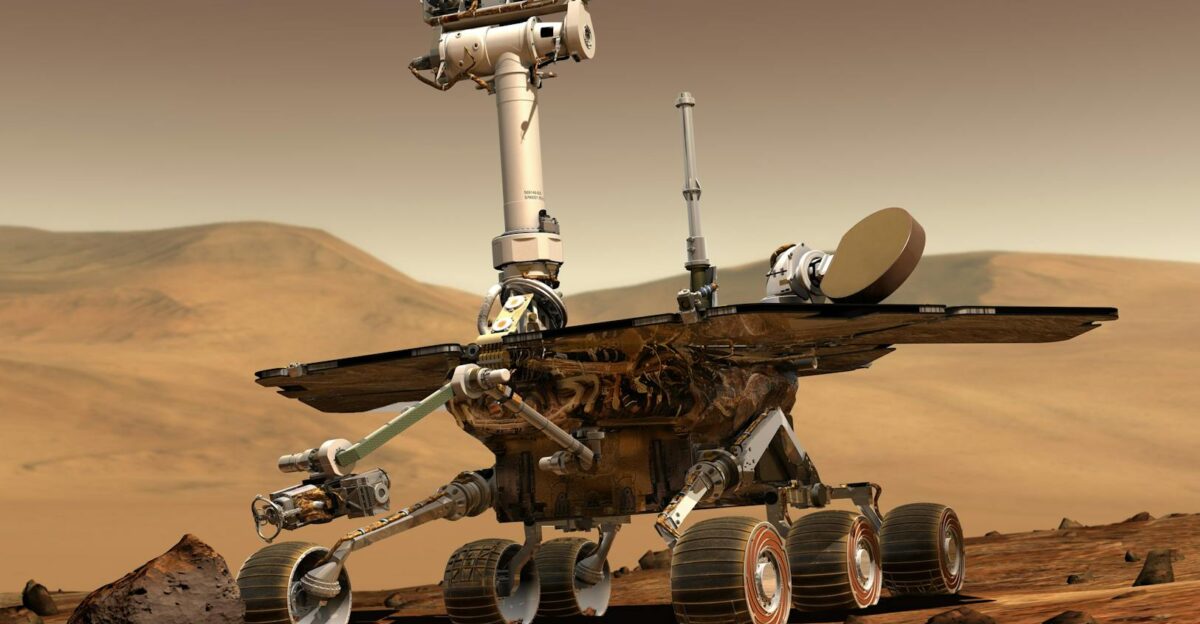
The impact of this discovery extends beyond Earth. Similar iron-oxide particles have been found in Martian meteorites.
By using magnetic tomography, scientists can distinguish between biological and non-biological magnetite on Mars. This could prove invaluable for future missions aimed at discovering ancient life on the Red Planet, bridging paleontology and astrobiology.
Re-examining Museum Collections
Natural history museums worldwide are now equipped to re-examine fossil collections for previously undetected magnetic features.
This opens up a new avenue for studying ancient animal behavior and sensory capabilities. What was once thought to be a static collection of ancient bones could reveal new stories about how animals interacted with their environment millions of years ago.
Capturing the Public’s Imagination

The discovery of an ancient animal with a built-in GPS system has captured the public’s imagination. It has become a staple in science museums and educational exhibits, bringing the mystery of ancient life into the modern era.
The use of cutting-edge technology to reveal these secrets makes complex paleontology accessible to audiences of all ages.
A Catalyst for Future Research
The success of this international collaboration signals that the future of paleontological research lies in combining advanced imaging technology with traditional fossil studies.
The interdisciplinary approach has not only expanded our understanding of ancient life but also attracted funding for further investigations into ancient migration, sensory systems, and evolutionary processes.
Innovation Beyond Paleontology

The magnetic vector tomography technique has applications that extend beyond paleontology. Engineers and materials scientists are now looking at ways to adapt this method for modern materials and technologies.
This discovery shows how fundamental research can spark innovation across multiple fields, leading to new technologies that may benefit industries far removed from paleontology.
Insights into Climate and Ocean History
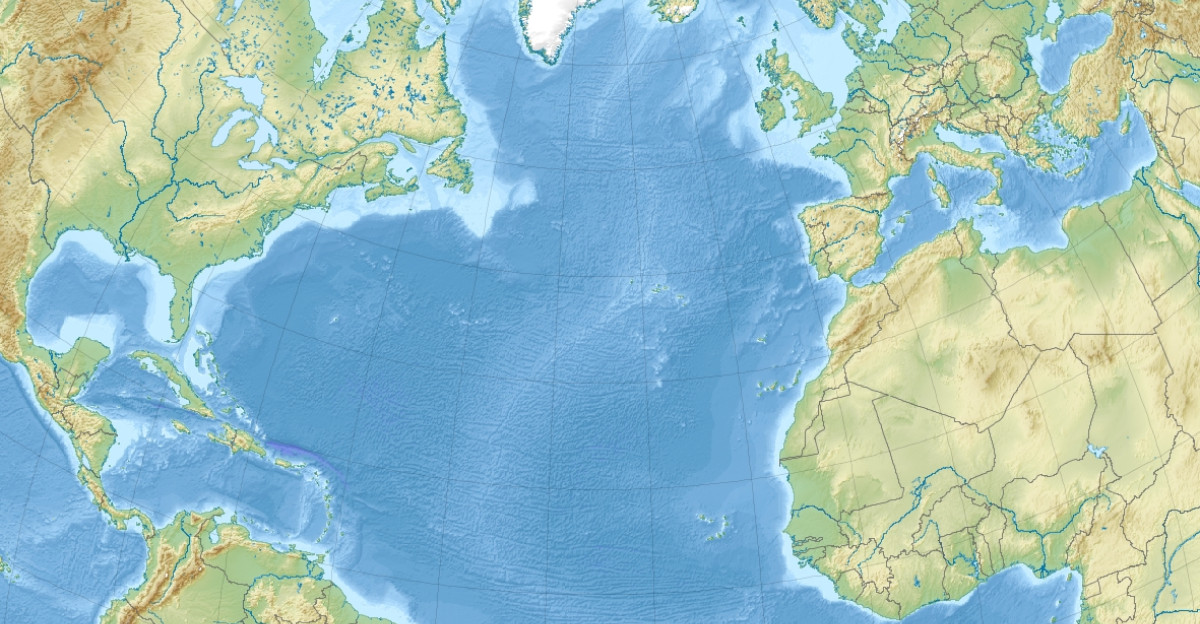
The location of the magnetofossils in the North Atlantic provides vital clues about ancient ocean conditions.
By studying how these creatures navigated, scientists can gain insights into how past ocean currents and environmental conditions shaped animal migration patterns. This knowledge is crucial for understanding how modern species might adapt to climate change and shifting ocean conditions.
The Economic Ripple Effects

The successful use of magnetic tomography could lead to increased demand for high-resolution imaging equipment.
Companies that manufacture synchrotron components, advanced microscopes, and X-ray imaging systems stand to benefit from this breakthrough. The ripple effect of this scientific discovery extends into the markets for scientific equipment, as research institutions adopt this powerful technique.
New Career Opportunities in Science
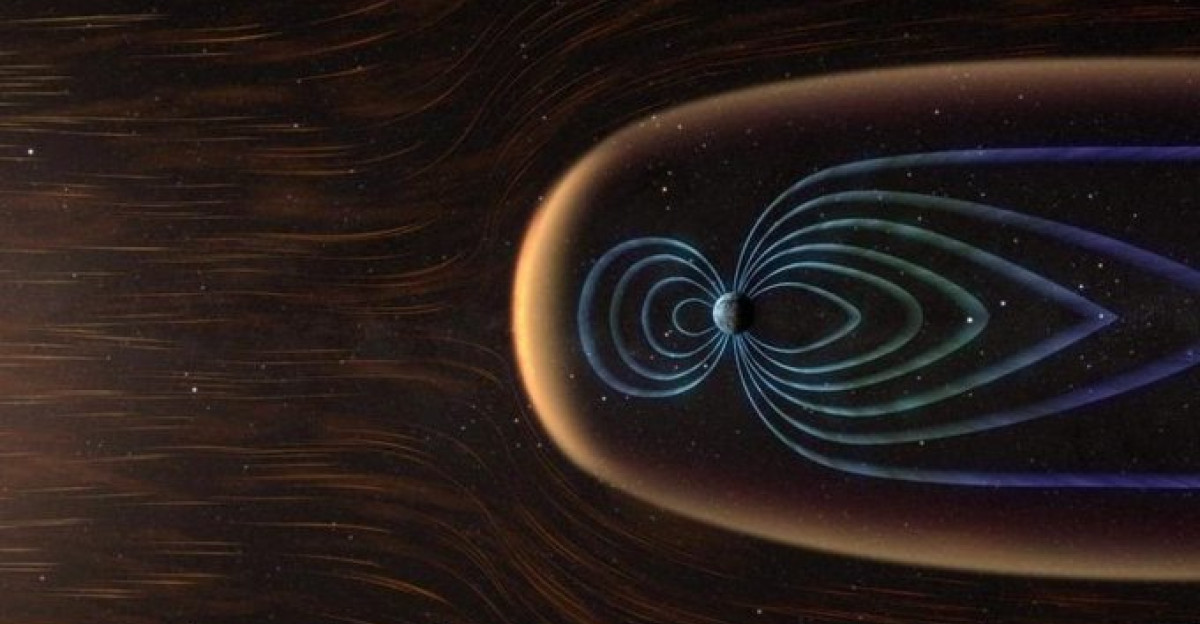
The discovery has already had a profound impact on the careers of early-career researchers, like Jeffrey Neethirajan, who contributed to this landmark study.
As the field of paleomagnetic research grows, new career opportunities will arise for scientists specializing in advanced imaging and computational analysis. This discovery could shape the future of academic programs and research priorities in earth sciences.
What This Means for You

Although this discovery may not immediately impact daily life, it shifts our understanding of animal evolution and sensory biology.
For educators and science communicators, it provides a rich topic for teaching about evolution, technology, and the power of modern imaging. For researchers, it opens new paths for exploration, offering fresh insights into the ancient world.
The Next Frontier of Discovery

Paleontologists will now focus on identifying the creature behind the magnetofossils. With magnetic tomography, researchers will examine other ancient fossils for similar structures.
The hunt for more examples of early magnetoreception is underway, and the technique may also be used in future Mars exploration to detect ancient life. This discovery is just the beginning.
The Cascading Effects of This Discovery
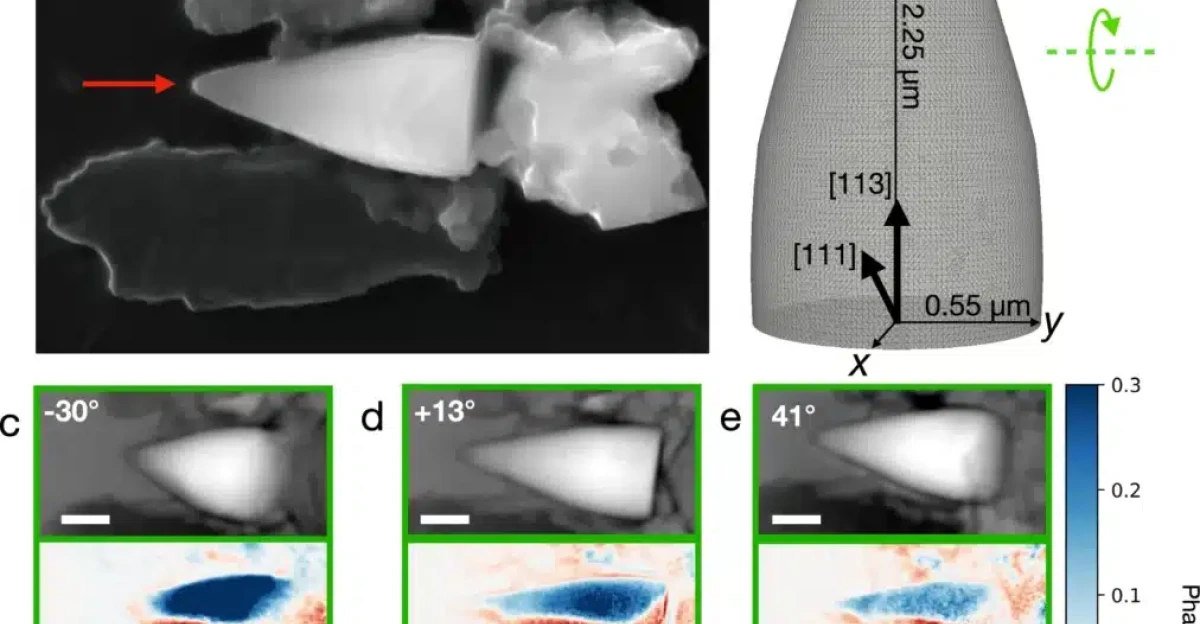
The 97-million-year-old magnetofossil is not just a relic of the past—it is a window into the evolutionary history of life on Earth.
This discovery has set in motion a cascade of future research, new technologies, and fresh perspectives on the mysteries of ancient life. As science advances, we will continue to uncover the secrets that have been hidden in the fossil record for millions of years.
Sources:
“Scientists discover ancient magnetic fossils of unknown creature with internal GPS.” Space com, 26 Nov 2025.
“Ancient ‘animal GPS’ identified in magnetic fossils.” University of Cambridge Research News, 18 Nov 2025.
“Magnetic vector tomography reveals giant magnetofossils are optimised for magnetointensity reception.” Communications Earth & Environment (Nature portfolio), 2025.
“Magnetic fossils may reveal ancient creature’s internal ‘GPS system’.” Reuters Science, 17 Nov 2025.